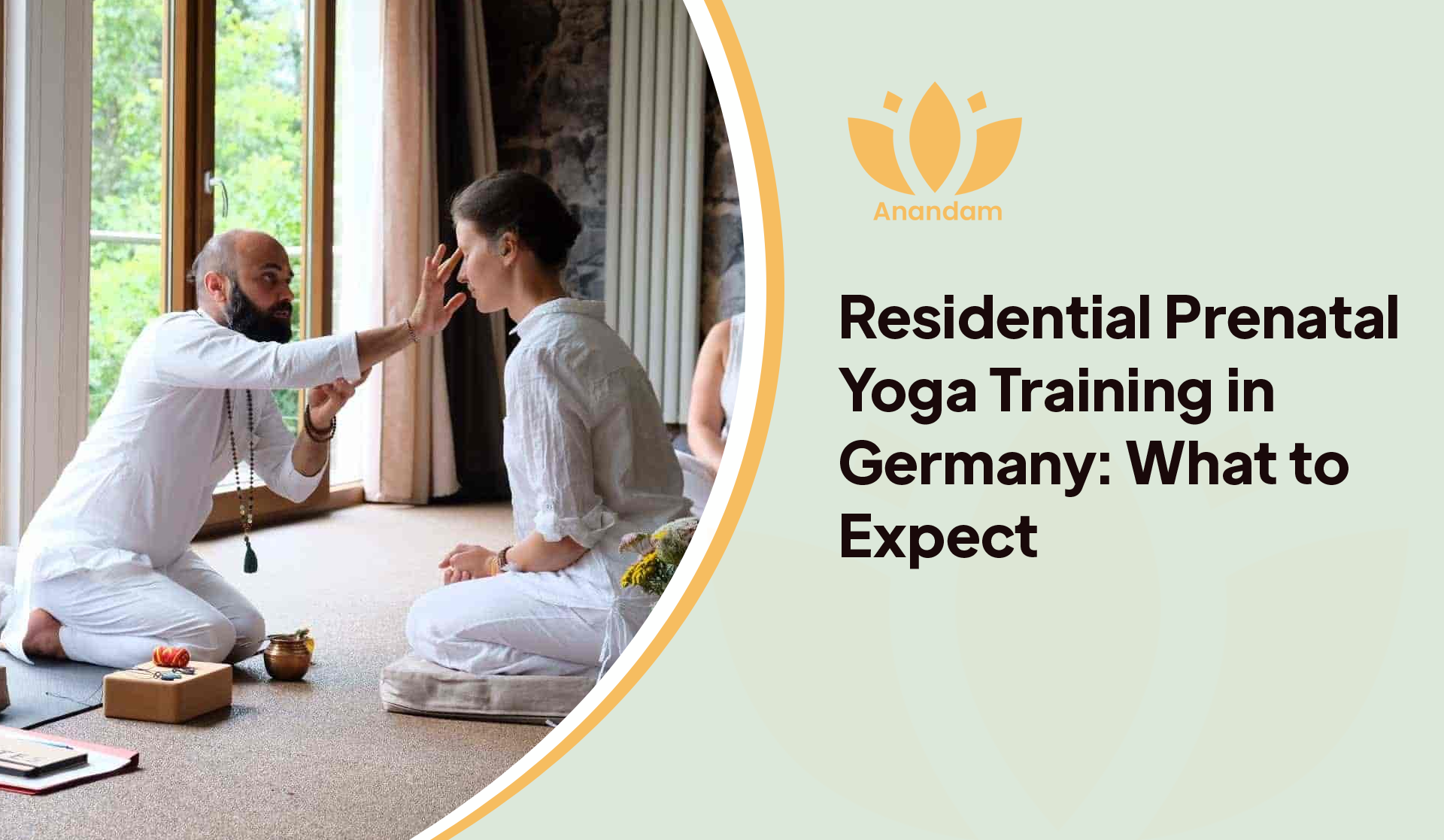
Residential Prenatal Yoga Training in Germany: What to Expect
- Anandam Yoga
- Last Updated: October 24, 2026
Written by
M.A. Yoga and Yoga Therapy, Uttarakhand University · Co-Founder and Lead Teacher, Anandam Yoga School · Direct descendant of the Rishi Atri lineage
Reviewed by
Dr. Katharina Austermann, PhD, E-RYT 500
PhD in Nutrition and Food Science, University of Bonn (2023) · Co-Founder and Anatomy Faculty, Anandam Yoga School · Diploma in Ayurveda
Content updated: October 14, 2026 · Estimated reading time: 9 minutes
Quick Answer
Online prenatal yoga teacher training can suit people who need to learn from home, while residential training can suit those who want dedicated time away and face-to-face learning. Neither format guarantees quality. Compare teacher access, practical feedback, prenatal and postnatal content, admission requirements, and the exact certificate before booking. At Anandam, you can join the residential course for personal learning without a 200-hour qualification. A completed 200-hour yoga teacher training is required only for the teaching certificate.
Key Takeaways
- Neither online nor residential delivery guarantees quality. Compare the teachers, curriculum, feedback, assessment, and certificate.
- Online study may provide greater flexibility, but you should verify live attendance, recording access, observed teaching, and how feedback is delivered.
- Residential study creates a shared learning environment, but it requires travel, time away, and a room arrangement that supports your rest.
- A strong course should distinguish prenatal teaching from postnatal recovery and maintain clear professional boundaries.
- Anandam's November 20-29, 2026 program is a 100-hour residential course in Heimbach, Germany, taught in English only. You can join for personal learning without a 200-hour YTT. Only participants who have completed a 200-hour yoga teacher training are eligible for the teaching certificate.
You may be looking for the best online course because your calendar is full. You may also be wondering whether leaving home for an in-person program would help you learn with more focus. Both are reasonable starting points.
The useful question is what kind of learning you need. Choosing a prenatal and postnatal yoga teacher training involves more than finding videos or collecting hours. Depending on your goals, you may be learning to support your own practice, understand your partner's needs, or develop specialist teaching skills. In every case, listening, thoughtful adaptation, and recognizing the limits of your role matter.
At Anandam, our approach brings together traditional yoga, understanding of the body, and care for the person in front of you. This guide helps you compare formats before deciding whether our residential course in Germany is your next step.
What Is the Difference Between Online and Residential Training?
Online prenatal yoga teacher training takes place remotely. A program may use recorded lessons, live video sessions, assignments, or a combination. Ask which activities require attendance and whether anyone observes your teaching.
Residential prenatal yoga teacher training brings students together at a course location, with accommodation as part of the experience. You travel to learn in person, follow a shared rhythm, and step away from your usual responsibilities. A residential course is one type of offline or in-person training and a local weekend course is another.
| Decision | Online format | Residential format |
|---|---|---|
| Schedule | Check live-session times, deadlines, and access to recordings. | Check course dates, travel days, and daily attendance expectations. |
| Feedback | Ask how teachers review your practice and teaching through video. | Ask how much observed practice and individual feedback is included. |
| Total cost | Include tuition, equipment, and any separate assessment fees. | Include tuition, room, meals, travel, and extra nights. |
| Learning environment | Consider internet access, privacy, and interruptions at home. | Consider shared space, room choice, and being away from home. |
| Certification | Verify the exact credential and its requirements. | Verify the exact credential and its requirements. |
When Can Online Training Be a Good Fit?
Learning from home can work well if travel is difficult, you have caring responsibilities, or you prefer to spread study across several weeks. Recorded material may be useful when you want to revisit a topic, but do not assume every online course includes recordings or unlimited access.
Ask whether you can bring questions to a teacher, practice explaining a sequence, and receive feedback on your choices. Live interaction and thoughtful assessment matter more than the delivery format.
If you search for the best prenatal yoga teacher training online, use your goals to define "best." The strongest fit for someone developing studio classes may differ from the fit for a practitioner exploring personal learning. Our broader guide to online versus in-person yoga teacher training explains the supervision questions that apply across specializations.
When Can Residential Learning Be a Good Fit?
An in-person course may suit you if you want to set aside a concentrated period for learning. Sharing a room for practice makes it possible to explore props, positioning, and teaching language together. The value still depends on how the program uses that time.
Residential learning also asks something of you. You need to plan travel, time away from work, and your responsibilities at home. Think about your comfort with a shared schedule and whether a private or shared room would support your rest.
For people comparing prenatal yoga teacher training in Europe, Germany can be a practical location to consider. Our course takes place in Heimbach, in the Eifel National Park. Check the journey from your own starting point rather than choosing a destination only because it sounds close.
Seven Questions to Ask Before You Enroll
- Who teaches the course? Read their backgrounds and ask who will lead the sessions you care about.
- How will I receive feedback? Ask about observed practice, teaching exercises, and assessment.
- Is postnatal yoga included? Pregnancy and the postpartum period deserve distinct attention.
- What preparation is expected? Admission and teaching certificate requirements differ between schools. At Anandam, you can join this course without a 200-hour YTT for personal learning, but a completed 200-hour YTT is required for the teaching certificate.
- What certificate will I receive? Clarify course completion, continuing education, and any separate registration pathway. Our guide to prenatal yoga certification requirements explains these distinctions.
- What is included in the fee? Ask about accommodation, meals, materials, taxes, and additional costs.
- What are the booking terms? Read payment, cancellation, and transfer conditions before committing.
Compare the Teaching Approach
A useful course should help you make thoughtful choices, rather than memorize a universal list of poses. For example, how would you offer an alternative when a student is uncomfortable? How would you ask a question without making an assumption about their birth or recovery?
These are teaching questions. A yoga qualification does not turn a teacher into a healthcare professional. Look for clear professional boundaries alongside anatomy and practical learning.
Meet Katharina Austermann, PhD, whose background connects nutrition science and yoga, and Yogi Sandeep Atri, whose teaching is rooted in the Atri lineage. Their shared school emphasizes understanding, practice, and human connection.
Who Can Join, and Who Can Receive the Teaching Certificate?
You do not need a 200-hour yoga teacher training qualification to join Anandam's prenatal and postnatal course. The course welcomes people who want to learn for themselves as well as those who want to support someone through pregnancy and the postpartum period.
- Pregnant women and new mothers can join to deepen their understanding of prenatal and postnatal yoga.
- Husbands, wives, and partners, including male partners, can join to learn how to offer thoughtful support.
- Yoga practitioners and people interested in personal learning can explore the subject without planning to teach.
- Yoga teachers can develop specialist knowledge for working with pregnant and postpartum students.
Participation and teaching certification have different requirements. Only participants who have completed a 200-hour yoga teacher training are eligible to receive the teaching certificate after successfully completing this course. Joining for personal learning or partner support does not qualify you to teach prenatal or postnatal yoga.
Tell us about your background and goals when you inquire so we can help you understand the learning pathway that fits you.
Upcoming Residential Training in Germany
- Dates: November 20-29, 2026
- Location: Heimbach, Eifel National Park, Germany
- Duration: 100 hours over 10 calendar days, with 9 nights of accommodation
- Language: English only
- Participation: Open to yoga teachers, pregnant women, husbands, wives, male partners, and people joining for personal learning or to support a loved one. A 200-hour qualification is not required to join.
- Teaching certificate: Only participants who have completed a 200-hour yoga teacher training are eligible to receive the teaching certificate after successfully completing this course.
- Fees: €2,700 per person in a shared twin room or €2,900 per person in a private double room
- Included: Training, 9 nights of accommodation, breakfast, lunch, dinner, and study materials. The teaching certificate is available only to eligible participants who have completed a 200-hour yoga teacher training and successfully complete this course
For a broader overview of topics and eligibility, read the complete prenatal and postnatal yoga training guide. If you are comparing the depth of specialist programs, our 50-hour vs. 100-hour training guide explains useful questions to ask.
Frequently Asked Questions
Is online prenatal yoga teacher training as good as in-person training?
Quality depends on the teachers, curriculum, practical feedback, and assessment. Compare these features in both formats rather than assuming either format is always better.
Does Anandam offer this prenatal training online?
The November 20-29, 2026 course discussed here is residential and takes place in person in Heimbach, Germany. If you need an online option, contact the school to discuss available programs.
Where can I take prenatal yoga teacher training in person in Europe?
Anandam offers a 100-hour residential prenatal and postnatal course in Heimbach, Germany, on November 20-29, 2026. Ask about current availability.
What language is the course taught in?
The November 20-29, 2026 course is taught in English only.
Do I need a 200-hour qualification for Anandam's course?
No. A 200-hour yoga teacher training qualification is not required to join for personal learning or to support a partner or loved one. Only participants who have completed a 200-hour yoga teacher training are eligible to receive the teaching certificate after successfully completing this course.
How much does the residential course cost?
The fee is €2,700 per person for a shared twin room or €2,900 per person for a private double room. The package includes training, 9 nights of accommodation, breakfast, lunch, dinner, and study materials. Only participants who have completed a 200-hour yoga teacher training are eligible for the teaching certificate after successful course completion.
Can pregnant women and male partners join the course?
Yes. Pregnant women, new mothers, husbands, wives, and partners, including male partners, can join for personal learning or to support a loved one. A 200-hour yoga teacher training qualification is not required for participation.
Will I receive a teaching certificate without a 200-hour qualification?
No. Only participants who have completed a 200-hour yoga teacher training are eligible to receive the teaching certificate after successfully completing this course. You can still join for personal learning or partner support without that qualification.