Home » Holistic Therapy » Online Yoga Therapy Sessions
Yogi Sandeep Atri offers 1:1 online yoga therapy sessions via Zoom for individuals dealing with back pain, chronic pain, stress, burnout, anxiety, nervous system dysregulation, post-injury rehabilitation, and mobility issues. Sessions are available worldwide in English. Yoga therapy differs from a regular yoga class in that the practice is designed entirely around the individual’s specific condition, body and therapeutic goals – not a general group sequence. Sandeep holds an E-RYT 500 with Yoga Alliance, an M.A. in Yoga and Yoga Therapy from Uttarakhand University and is a direct descendant of the Rishi Atri lineage – one of the seven Saptarishi sage families of ancient India. Programs range from a Foundation Therapy plan (EUR 180) of 2 sessions to a Therapeutic Support Plan of 6 sessions (EUR 680) and an Ongoing Therapy Plan of 12 sessions (EUR 1,300).

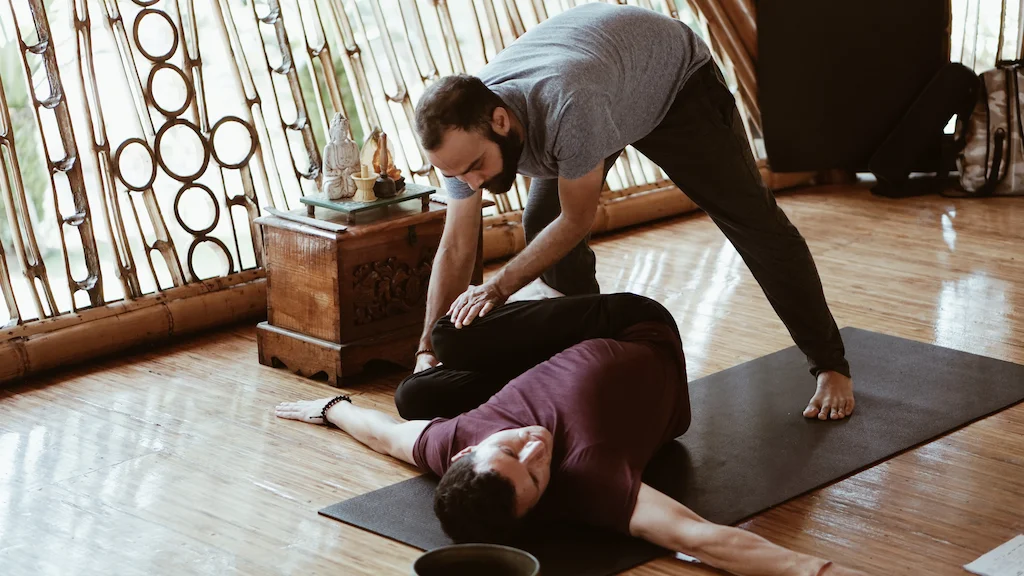
Yoga therapy, to me, is very different from teaching a general group class. In a one-to-one setting, the practice can be adapted to the individual person, their body, mind, energy and life situation. I work mostly with people experiencing back pain, chronic tension, stress, anxiety, burnout, or feeling physically and mentally exhausted.
My approach is deeply influenced by the traditional teachings of the Atri lineage in which I was raised.
We understand Yoga not only as physical movement, but as a path to restore balance and harmony within the whole being. Alongside this traditional foundation, my training in Yoga Therapy allows me to adapt these practices in a practical and therapeutic way for modern life. One example that stays with me is a client who came to me after living with chronic lower back pain and stress for many years.
Through regular and individualized practice, the pain gradually became less intense, and sleep improved. Over time the client felt calmer, more grounded and more connected to himself again.
Yoga Therapy is adapted to the individual person, their condition, and their current capacity.
Back Pain and Chronic Pain
Yoga therapy practices for pain related conditions like back pain, joint pain, sciatica-related discomfort, arthritis-related limitations, and chronic pain conditions. Because every body and every experience of pain is different, the practices are always adjusted to the individual person, their condition and their current capacity. Depending on the situation, the work includes therapeutic movement, mobility and strengthening practices, Pranayama, relaxation, and restorative practices to support greater mobility, stability and balance within the body and nervous system.
Pain SupportStress and Burnout Recovery
Yoga Therapy for stress and burnout goes beyond relaxation. It addresses the nervous system dysregulation that often underlies chronic stress, exhaustion, anxiety, insomnia, and difficulty fully resting or recovering. Depending on the individual person and their condition, the work includes specific Pranayama practices, restorative yoga, Yoga Nidra, Meditation and gentle movement to support deeper rest and recovery.
Stress RecoveryAnxiety and Nervous System Dysregulation
Yoga Therapy for anxiety and nervous system dysregulation focuses on calming chronic states of inner tension, overstimulation and sensory overload. It supports people experiencing anxiety, restlessness, racing thoughts, shallow breathing, hypervigilance, or difficulty feeling safe and settled in their body. Practices are adapted to the current state of the nervous system and can include breathing practices like coherent breathing, practices to activate the vagus, Pratyahara practices like Yoga Nidra, to reduce the sensory input, as well as slow, calming movement practices.
Nervous SystemPost-Injury Rehabilitation
After injury, the body often develops protective movement and tension patterns that can remain even after the initial healing process. Yoga Therapy can support people recovering from physical injuries, surgery, long periods of immobility, or physical tension that developed after pain or compensation. The aim is not only to rebuild strength and mobility, but also to gradually release fear, compensation patterns and chronic tension held in the body.
RehabilitationMobility and Functional Movement
For clients whose mobility and movement quality have become limited through aging, sedentary work, chronic tension or longer periods of inactivity. Therapeutic yoga postures help to increase range of motion, improve mobility, posture, coordination and stability to create more freedom in movement.
MobilitySomatic Yoga and Trauma-Informed Work
For clients who are looking for a slower, more body-aware approach to Yoga that emphasizes sensing, breath and internal awareness. The practices focus on tension release through movement and interoception. The aim is to develop greater awareness of physical sensations, tension patterns, and habitual reactions in the body and the practices are approached gradually and with respect for each person’s individual boundaries, capacity, and lived experience.
Body AwarenessA gradual, individualized Yoga Therapy process designed around your body, condition, and current capacity.
Step One
Initial Consultation 60 min · via Zoom
We talk through your health history, current condition, daily life, and what you are experiencing physically and mentally. I also observe your movement, posture, breathing patterns, and overall nervous system state. That helps me to understand how your body is responding to stress, tension and pain. At the end of the session, I share my initial assessment and recommend a therapeutic approach if appropriate.
Step Two
Personalized Therapy Practice Adapted to your condition
Based on the consultation, I create an individualized Yoga Therapy practice adapted to your condition, body and current capacity. Depending on your needs, this includes therapeutic movement, mobility and strengthening practices, Pranayama, relaxation, restorative practices, and guided recordings to support your practice between sessions.
Step Three
Ongoing Sessions & Adjustment An evolving process
Through regular follow-up sessions, the practice gradually evolves as your body and mind respond over time. The sessions are used to refine the practices, support progress and adapt the approach to your changing needs, as Yoga Therapy is always an individualized and evolving process.
No rigid plans. No one-size-fits-all protocol. The pace and depth of each session depends on your condition, nervous system state, and current capacity. Yoga Therapy is designed to support gradual, sustainable progress through practices that are adapted to you.
All sessions via Zoom. Available in English. Worldwide.
| Program | Sessions | Duration | Price | Best For |
|---|---|---|---|---|
| Foundation Therapy Plan | 2 sessions | 2-4 weeks | EUR 180 | Assessment & Foundations |
| Therapeutic Support Plan | 6 sessions | 8-10 weeks | EUR 680 | Specific ConditionsTherapeutic Support |
| Ongoing Therapy Plan | 12 sessions | 5-6 months | EUR 1,300 | Chronic ConditionsLong-Term Change |
Included in all programs
Questions before booking? Write to info@anandamyogaschool.com
This program may be a good fit for you if:
This work is not a general yoga class and does not replace medical diagnosis or treatment. Yoga Therapy is intended to work alongside conventional medical care and other therapeutic approaches where appropriate.
What is the difference, and why does it matter when you are working with pain, stress, burnout, anxiety, or physical limitations?
A teacher leads a group through a fixed or semi-fixed sequence. Modifications are offered, but the core practice is the same for everyone. The goal is to improve and maintain physical health, flexibility, and overall wellbeing.
Yoga Therapy is individualized and adapted to the specific person, their condition, physical limitations, and overall life situation. Rather than following a fixed class format, the practices are selected and adjusted based on what the body and mind need at that particular time. Traditional Yogic practices such as asana, pranayama, meditation, and philosophical themes are used in a therapeutic and supportive way to achieve therapeutic change in a specific area.


Physiotherapy primarily focuses on the diagnosis, rehabilitation, and physical treatment of injuries, pain, and movement dysfunctions from a medical and biomechanical perspective. Yoga Therapy also works with pain, mobility, posture, breathing, and movement patterns, but takes a more holistic approach that includes the relationship between body, breath, stress, lifestyle and mental state. Rather than focusing only on physical rehabilitation, Yoga Therapy uses traditional Yogic practices to support balance within the whole system. The two approaches are not mutually exclusive and can complement each other very well depending on the individual person and condition.
No. Yoga therapy is adapted entirely to the individual. No prior yoga experience is required or assumed
The number of sessions depends on your individual condition, how long the issue has been present, and the level of support you are looking for. If you are unsure which option may be right for you, you are welcome to book a free clarity call to discuss your situation and see which plan is right fit for you.
Yes. Yoga therapy works alongside conventional medical treatment, not instead of it. I recommend clients continue working with their doctor, physiotherapist, or specialist throughout our work together.
Yes, online Yoga Therapy can be highly effective, especially because the practices are individualized and designed to be integrated into your daily environment and routine. The online format also allows you to practice consistently from home, while still receiving personalized guidance, observation, and ongoing adjustment throughout the process.

Yes. For conditions where both the nutritional and somatic dimensions are significant – PCOS with anxiety, burnout with metabolic fatigue, chronic pain with stress – a combined approach with both programs is available. Contact info@anandamyogaschool.com to discuss.