
The Modular Path: Why 50-Hour and 100-Hour Yoga Specializations are the Best Career Move in 2026
- Anandam Yoga
- Last Updated: September 15, 2026
Modular yoga training refers to short, focused certifications (50-hour and 100-hour courses) that allow teachers to specialize in high-demand niches.
The three main benefits are:
Faster skill monetization through niche expertise
Deeper scientific understanding (fascia, nervous system, trauma response)
Flexible career growth by stacking certifications globally
Not every specialization needs the same duration. Before choosing a module, compare when 50 hours is enough and when 100 hours is the more responsible choice, based on your prior training, the amount of practicum, the complexity of the subject, and the students you intend to teach.
Introduction: The Shift from Generalist to Specialist
In 2026, the yoga industry has quietly undergone a structural shift.
While 200-hour yoga teacher training (RYT 200) remains the entry point, it is no longer enough to build a sustainable or premium teaching career. Studios, retreat centers, and private clients are increasingly hiring specialists—not generalists.
A teacher who only completed a 200-hour course is now competing with thousands of similar profiles globally. Meanwhile, those who have added targeted 50-hour and 100-hour certifications—in areas like Yin Yoga, Yoga Nidra, trauma-informed yoga, or arm balancing—are:
Charging 2x–5x higher session fees
Getting invited to teach retreats and workshops internationally
Building distinct personal brands
This evolution mirrors other industries: general knowledge opens the door, but specialization builds authority and income.
This article, reviewed by Dr. Katharina Austermann and Yogi Sandeep Atri, explores why modular yoga education is not just a trend—but the most strategic career move for yoga teachers in 2026.
How does modular training increase a teacher's income?
The core advantage of modular training is simple: it aligns your skills with market demand.
Instead of teaching generic Hatha or Vinyasa classes, you position yourself in high-value niches.
Key Income Advantages of Modular Certifications
Premium Pricing Power
Specialized sessions (e.g., Yin for stress, Nidra for sleep, therapy-based yoga) command higher fees.Workshop & Retreat Opportunities
Studios prefer specialists who can lead paid workshops rather than just regular classes.Online Course Creation
Niche expertise allows you to build digital products and programs.Corporate & Wellness Collaborations
Companies now seek yoga teachers trained in stress, burnout, and nervous system regulation
What is the science behind “The Niche”?
One of the strongest arguments for modular training comes from science.
Short, focused modules allow teachers to go deeper into specific physiological and neurological systems, which is rarely possible in a 200-hour general course.
Example: Yin Yoga & Fascia Science
In a 50-hour Yin Yoga training in Germany, you study:
The fascia network (connective tissue system)
Long-held postures and their effect on joint health
The relationship between fascia and emotional release
Modern research shows fascia is not just structural—it plays a role in trauma storage and sensory perception.
Example: Yoga Nidra & Nervous System Regulation
In a 50-hour Yoga Nidra in Germany module, you explore:
Parasympathetic activation
Brainwave states (alpha, theta)
Techniques for deep rest and trauma healing
According to neuroscience insights reviewed by Dr. Katharina Austermann, practices like Yoga Nidra can significantly impact stress hormones and cognitive recovery.
Why is Vancouver emerging as a hub for science-based yoga training?
North America has seen a surge in demand for evidence-based yoga education.
A leading example is the 50-Hour Yin Yoga Training in Vancouver, where traditional practices are taught alongside:
Anatomy labs
Fascia mapping
Nervous system integration techniques
This model represents the future of yoga education:
ancient wisdom + modern science + practical application
For teachers targeting international markets, training in locations like Vancouver adds:
Global credibility
Exposure to diverse student populations
Networking with wellness professionals
How do 100-hour intensives accelerate mastery?
If 50-hour modules build specialization, 100-hour intensives build mastery.
These programs are designed to compress years of learning into immersive experiences.
The European Retreat Advantage
There is a clear difference between:
Learning in a city studio (weekend format) vs
Training in a retreat immersion (full-time focus)
Why Retreat-Based Modules Work Better
Distraction-free environment
Daily practice + theory integration
Faster physical and mental transformation
Stronger teacher-student mentorship
Why are Portugal and Greece becoming hotspots for advanced training?
Europe is rapidly positioning itself as a premium destination for yoga specializations.
Programs like the 200 Hour Yoga Teacher Training in Portugal and Crete, Greece are attracting serious practitioners who want:
Advanced biomechanics understanding
Strength-building techniques
Safe progression into inversions and arm balances
These intensives are not just about poses—they focus on:
Shoulder stability and joint safety
Core integration
Confidence and fear management
Teachers who complete such programs often transition into:
Advanced workshop leaders
Retreat instructors
Online coaching specialists
How does modular training support long-term career growth?
One of the biggest advantages of modular learning is flexibility.
Instead of committing to a long program upfront, teachers can:
Learn → Apply → Earn → Reinvest → Specialize further
Modular Career Path Example
Complete 200-hour YTT (foundation)
Add 50-hour Yin Yoga (specialization #1)
Add 50-hour Yoga Nidra (specialization #2)
Take 100-hour advanced intensive (mastery)
Build a unique teaching identity
This approach creates a layered expertise model, which is far more sustainable than a one-time certification.
What is the Germany ZPP strategy and why does it matter?
Germany has introduced one of the most structured wellness systems in the world through ZPP (Zentrale Prüfstelle Prävention).
For yoga teachers, this creates a major opportunity.
How can modular courses help you qualify for ZPP?
To get listed under ZPP (which allows health insurance reimbursement for yoga classes), teachers typically need:
Specific curriculum requirements
Recognized course providers
Why Modular Training is the Smartest Route
Instead of enrolling in a single long program, teachers can:
Stack 50-hour and 100-hour certifications
Choose modules aligned with ZPP criteria
Build hours progressively
This makes Germany one of the most strategic markets for yoga teachers in 2026.
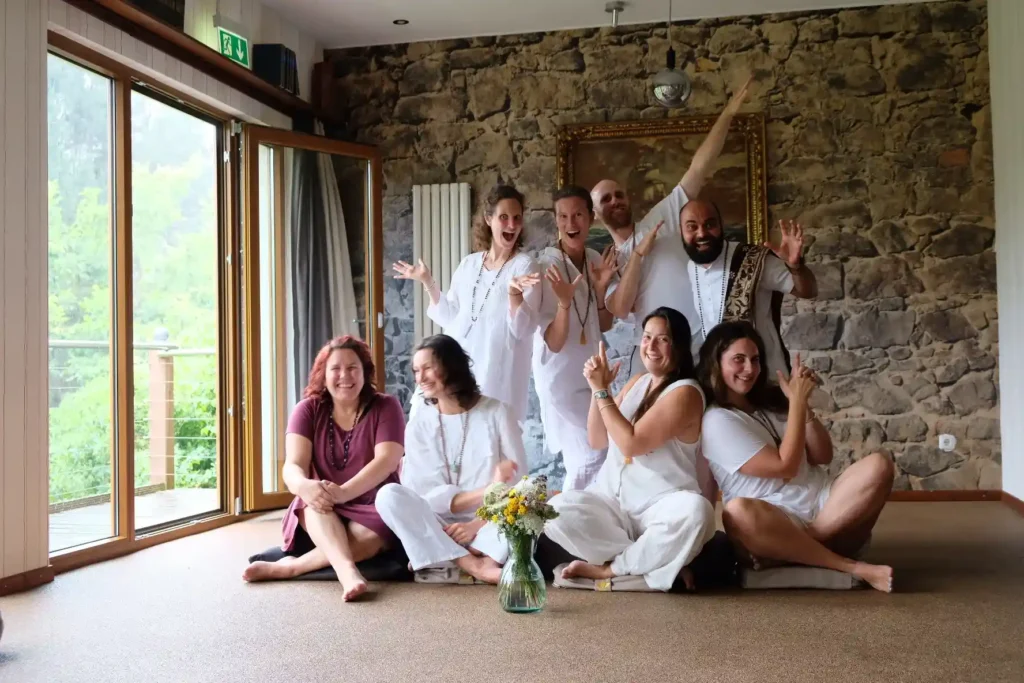
Why is Germany a key destination for yoga teacher training?
Germany offers:
A regulated wellness ecosystem
High demand for therapeutic yoga
Strong earning potential for certified teachers
By combining:
50-hour modules
100-hour intensives
Advanced certifications
Teachers can efficiently reach the ZPP standard, unlocking:
Insurance-backed clients
Stable income streams
Long-term career security
How does modular training improve teaching quality?
Beyond income and certification, modular training directly impacts teaching effectiveness.
Key Teaching Improvements
Deeper student understanding
Ability to adapt classes for injuries and conditions
Confidence in handling diverse groups
Better sequencing and cueing
Students today are more informed and expect:
Personalized guidance
Safe adjustments
Results-driven sessions
Specialized training equips teachers to meet these expectations.
What are the most in-demand yoga specializations in 2026?
Based on global trends, the following modules are seeing rapid growth:
Yin Yoga (fascia & mobility)
Yoga Nidra (sleep & stress)
Trauma-informed yoga
Breathwork & pranayama
Arm balancing & strength yoga
Therapeutic yoga for back pain
Teachers who combine 2–3 of these niches stand out significantly in the market.
How does modular learning support international teaching opportunities?
Yoga is now a global profession.
Modular certifications allow teachers to:
Train in multiple countries
Understand cultural teaching styles
Build an international network
Locations like:
Vancouver (science-based approach)
Germany (regulated wellness system)
Portugal & Greece (retreat-based mastery)
…create a well-rounded teaching profile that is highly valued worldwide.
What makes modular training psychologically effective?
From a learning perspective, modular training aligns with how humans actually grow.
Why it works better than long programs:
Short-term focus = better retention
Immediate application = stronger confidence
Progressive learning = less overwhelm
This approach also builds momentum, which is critical for long-term career success.
Why 2026 is the year of the specialist
The yoga industry is no longer about collecting certificates—it is about building a clear identity.
Teachers who succeed in 2026 are those who:
Understand their niche
Invest in modular, high-quality education
Combine science + tradition
Position themselves as specialists
The modular path is not just flexible—it is strategic, scalable, and future-proof.
Ready to design your modular yoga career?
If you’re serious about standing out in the global yoga industry, the next step is to plan your specialization journey.
Explore the 2026 course calendar and choose:
Your first 50-hour specialization
A 100-hour intensive for mastery
A long-term path aligned with your career goals
Because in 2026, the question is no longer: Are you certified?“
It is: “What are you specialized in?”