
The Definitive Guide on How to Teach Yoga Philosophy: Integrating Saptarishi Wisdom and Traditional Lineage

The modern yoga industry is at a crossroads. While the global market for physical Asana is saturated, there is a massive, underserved demand for spiritual and philosophical depth. For the modern instructor, the question is no longer just how to guide a Sun Salutation, but how to teach yoga philosophy in a way that feels authentic, accessible, and life-changing.
In this guide, we will explore the transition from being a fitness instructor to a lineage-based guide. We will dive deep into the Saptarishi wisdom, the professional advantages of a traditional Indian yoga lineage, and the pedagogical strategies required to weave thousands of years of Vedic thought into a 60-minute class.
The "Depth Gap" in Modern Yoga
Most 200-hour teacher trainings provide a foundational understanding of the Yoga Sutras or the Bhagavad Gita. However, once in the studio, many teachers struggle with the application. They fear sounding “preachy” or “pseudo-intellectual.”
Integrating yoga philosophy in classes is not about lecturing from a pedestal; it is about creating a “felt experience.” When students search for yoga beyond the poses, they are looking for a map of human consciousness. By anchoring your teaching in the Atri Lineage, you provide a stable, historical, and energetic foundation that “fitness yoga” simply cannot match.
The Saptarishi Framework – Ancient Archetypes for Modern Living
To teach philosophy effectively, you must have a framework. The main seven Indian sages (Saptarishis) represent the seven distinct rays of wisdom that govern human life. When you teach through these archetypes, you make the abstract concrete. Here are three examples of how to include the Rishis and their qualities into a yoga class.

Sage Atri: Inner Stillness Beyond Fluctuation
Sage Atri is revered for his deep tapas, clarity of perception, and unwavering inner steadiness. Atri represents pure awareness – the capacity to witness experience without being overwhelmed by it.
In yogic reflection, Atri symbolizes a state of neutrality and compassion, where one remains centered even amidst intensity and challenge.
- Class Theme: Equanimity and inner observation
- Teaching Cue: “As we hold this challenging asana, can you embody the quality of Atri – staying present, observing sensation without reacting, resting in awareness rather than resistance.”
Sage Vashishtha: Wisdom Born of the Breath
Sage Vashishtha is revered as a great teacher, royal guru, and embodiment of Dharma. According to tradition, he emerged from the breath of Brahma, symbolizing wisdom that arises not through force or effort, but through subtle awareness and presence. Vashishtha represents stability rooted in understanding – the kind of wisdom that unfolds naturally when the mind rests and the breath flows freely.
In yogic reflection, Vashishtha embodies grounded awareness sustained by the breath. He reminds us that clarity and insight are revealed when we listen deeply, allowing the rhythm of breathing to anchor the mind in stillness.
- Meditation Theme: Breath awareness, integration, and effortless steadiness
- Teaching Cue: “Bring your attention to the natural flow of the breath. Without changing it, simply observe. As each inhale and exhale moves through you, invite the quality of Vashishtha – steady, spacious, and wise. Let the breath support awareness, allowing understanding to arise without striving.”
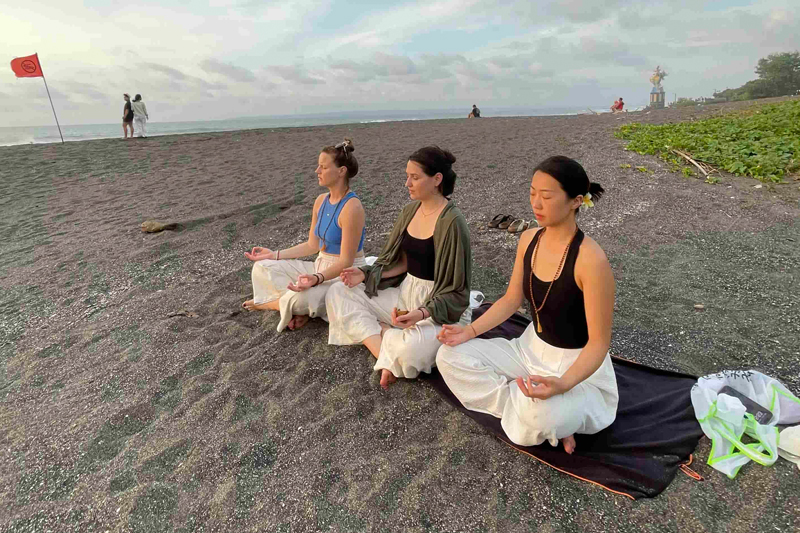

Sage Marichi: Awakening the Inner Light
Sage Marichi, a mind-born son of Brahma and one of the Saptarishi, is associated with the first light of creation and the arising of awareness.
His essence reflects the moment when consciousness awakens and intention is formed before action begins. In yogic reflection, Marichi symbolizes clarity of purpose—the subtle inner light that guides practice from within.
- Class Theme: Intention and conscious awareness
- Teaching Cue: “As we move through this practice, let the quality of Marichi guide us. Return again and again to your intention, allowing awareness to lead each breath, movement, and moment on the mat.”
Pedagogical Strategies – How to Weave Philosophy into Motion
The “10/10” teacher knows that philosophy should never stop the flow; it should fuel it. Here are four advanced strategies for integrating yoga philosophy in classes.
The "Micro-Dosing" Method
Instead of a 10-minute talk at the start, use 15-second “wisdom drops” during transitions.
Example: While moving from Warrior II to Humble Warrior, mention the transition from external power to internal surrender – a core Vedic concept.
The Energetic Link (Chakras & Nervous System)
Modern students value science. By linking the Saptarishi wisdom to the nervous system and the Seven Chakras, you provide a holistic view.
Teaching Tip: Connect the Root Chakra (Muladhara) to the stability of the ancient rishis to help students feel grounded during stressful times.
Thematic Sequencing
Design your physical sequence to mirror a philosophical journey.
Example: A “Heart Opening” sequence isn’t just about backbends; it’s about the concept of Anahata (unstruck sound – a subtle, inner vibration). The poses serve as the physical metaphor for the philosophy – opening up to pure awareness, love, and consciousness
Professional Impact – Why Traditional Lineage is Your Career Superpower
Standing Out in the Global Market
The market is crowded with instructors who can teach a “Power Flow.” It is remarkably empty of teachers who can explain the traditional vs. modern yoga divide and guide students through a spiritual transformation.
ZPP and Professional Standards (Germany)
For those aiming for the 2026 Germany intake, the professional stakes are high. The ZPP (Zentrale Prüfstelle Prävention) requires a rigorous understanding of yoga’s origins and psychological foundations. A teacher who can articulate the philosophy is far more likely to gain these high-level certifications, allowing their students to claim insurance reimbursements.
The Path to RYT 500
While a Yoga Alliance RYT 200 gets you in the door, a 500-hour professional path focuses heavily on these advanced philosophical concepts. Depth is what allows you to lead retreats, workshops, and teacher trainings of your own.
While many instructors focus purely on physical sequencing, those who master the Atri Lineage stand out as the premier choice for students looking for the best yoga teacher training in Europe. Mastering the professional application of Vedic thought is a core component of our 200 hour yoga teacher training Germany, which prepares you for both the classroom and the high standards of the international certification boards.
Choosing the Right Training – Lineage over Logic
You cannot teach what you have not lived. To truly master how to teach yoga philosophy, you must immerse yourself in a setting where these traditions are part of the air you breathe.
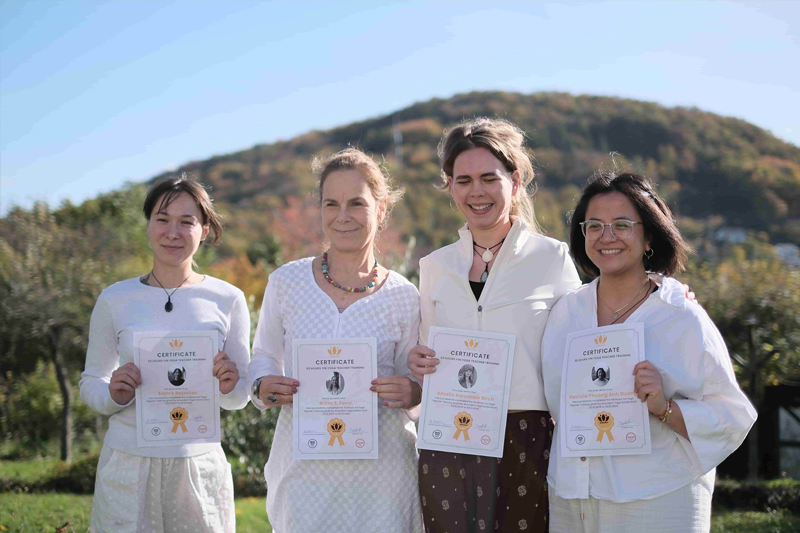
- Bali 2026: Focuses on the “Immersion” of spirit, perfect for those wanting to feel the ancient rhythms of the Atri Lineage in a retreat setting. Explore Bali YTT.
- Germany 2026: Focuses on the “Professionalization” of depth, bridging the gap between ancient sages and modern healthcare standards. Explore Germany YTT.
The Call to the Modern Rishi
The world does not need more people who can touch their toes; it needs more people who can touch their souls. By mastering the art of teaching philosophy, you fulfill the true purpose of yoga: the union of the individual self with universal wisdom.
Ready to begin your journey? Join us for the most comprehensive yoga teacher training in Europe for the March 2026 intake.
FAQ: Wisdom for the Aspiring Teacher
Is yoga philosophy hard to teach without being an expert?
It is a lifelong study. The key is to stay one step ahead of your students and speak from a place of personal practice rather than academic memorization.