
Sacral Chakra: The Center of Emotions, Creativity, and Pleasure

Introduction: The Sacral Chakra
The Sacral Chakra (Svadhisthana) is the second chakra in the body’s energy system. It governs our emotions, creativity, pleasure, and sensuality. When in balance, we experience emotional stability, joy, and creative flow. When imbalanced, we may struggle with emotional repression, creative blocks, or instability in relationships. In this blog, we will explore the Sacral Chakra’s function, signs of balance and imbalance, its connection to the nervous system, and practical ways to restore harmony through traditional Indian yoga practices. This mastery of the energy centers in the chakras in the human body was a core teaching of the Main Seven Indian Sages, whose wisdom forms the foundation of our school’s lineage.
Understanding the Sacral Chakra
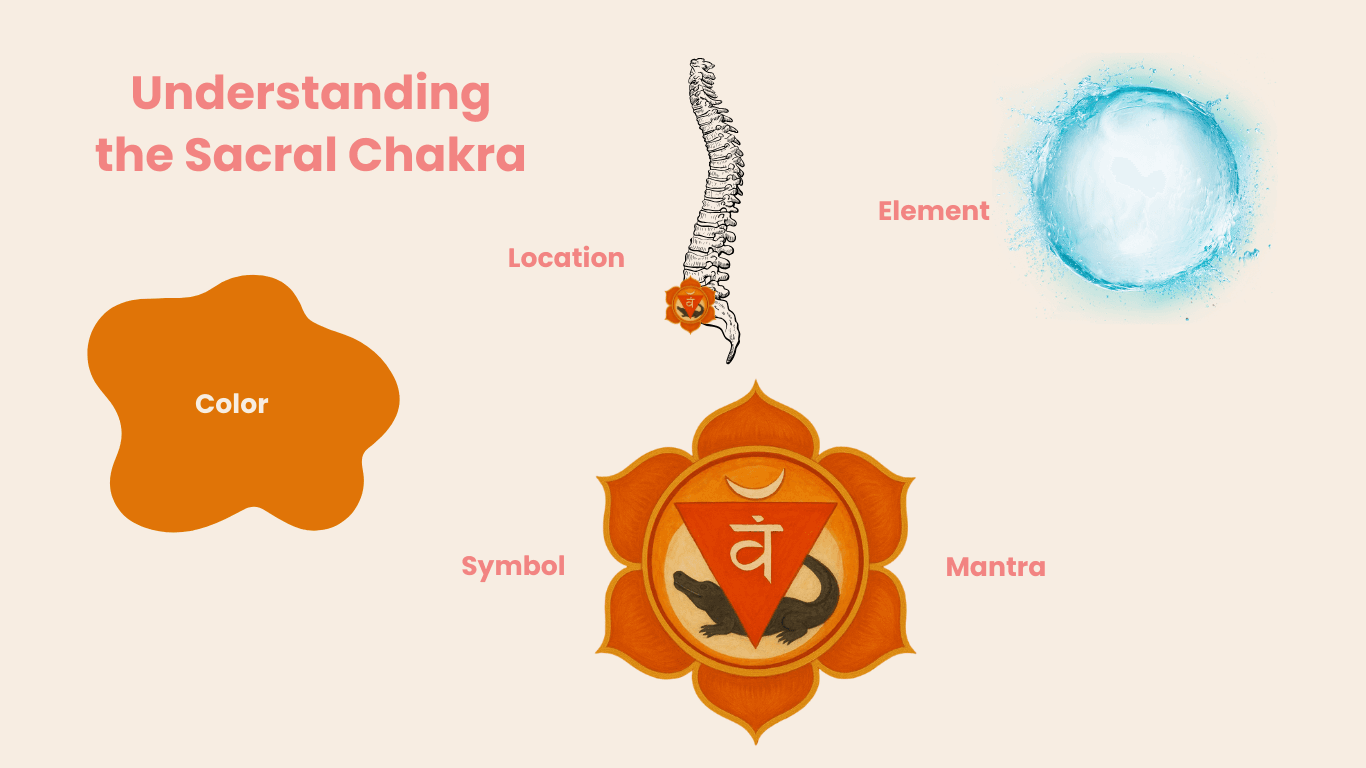
- Location: Lower abdomen, below the navel (between the pubic bone and the sacrum)
- In men, it is located near the prostate.
- In women, it is associated with the uterus and ovaries.
- Symbol: A six-petaled lotus with a crescent moon, representing the fluidity of emotions and creativity.
- Color: Orange
- Element: Water
- Governs: Emotions, pleasure, creativity, sexuality, and relationships
- Mantra: “Vam”
- Associated Prana: Samana Vayu (energy of digestion, assimilation, and balance) which we study extensively in our 50-Hour Pranayama Training.
The Sacral Chakra is the center of emotional intelligence and creative expression. It helps us embrace change, cultivate passion, and establish a healthy relationship with pleasure and sensuality.
While the Root Chakra provides our essential sense of safety and grounding, the Sacral Chakra allows us to move and flow within that safety, acting as the second major center in our energy system.
Signs of a Balanced Sacral Chakra
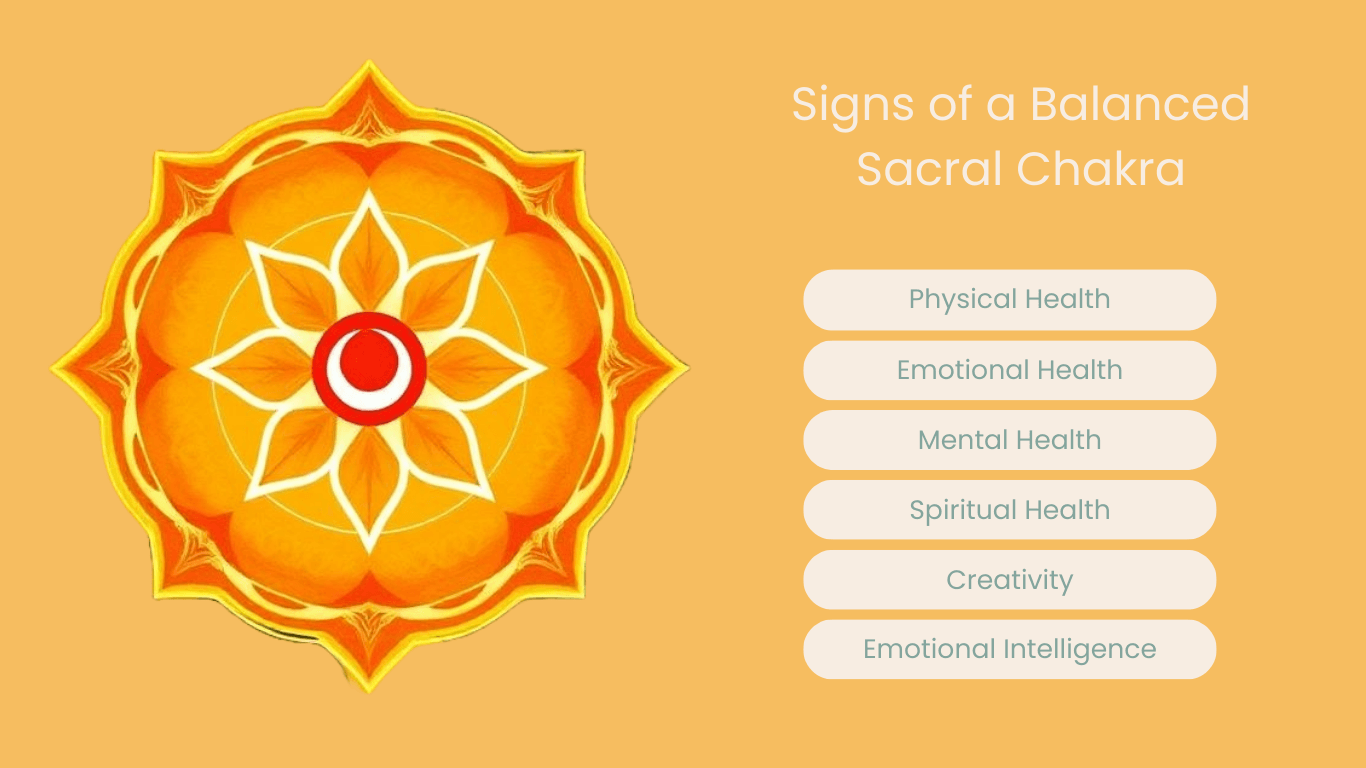
Physical Health
- Healthy reproductive organs and menstrual cycle
- Balanced digestion and kidney function
- Strong lower back and hips
Emotional Health
- Ability to experience and express emotions freely
- A sense of joy, passion, and playfulness
- Emotional adaptability and resilience
Mental Health
- Creative flow and inspiration
- A strong sense of self-worth and confidence
- Mental clarity and flexibility
Relationships
- Healthy and fulfilling intimate relationships
- Emotional openness and connection with others
- Ability to set and respect boundaries
Spiritual Health
- Deep connection to the body’s wisdom
- Comfort in embracing life’s natural rhythms
- Openness to joy and sensuality as spiritual experiences
Creativity
- A natural ability to think outside the box and embrace new ideas
- Free-flowing inspiration and motivation for artistic or innovative pursuits
- A sense of fulfillment in creative expression
- Spiritually, it allows for a deep connection to the body’s wisdom, often a core focus during a Bali Yoga Teacher Training immersion.
Emotional Intelligence
- The ability to recognize, understand, and regulate emotions
- Empathy and sensitivity to others’ emotions
- A deep awareness of emotional needs and a balanced way of fulfilling them
Signs of a Imbalanced Sacral Chakra
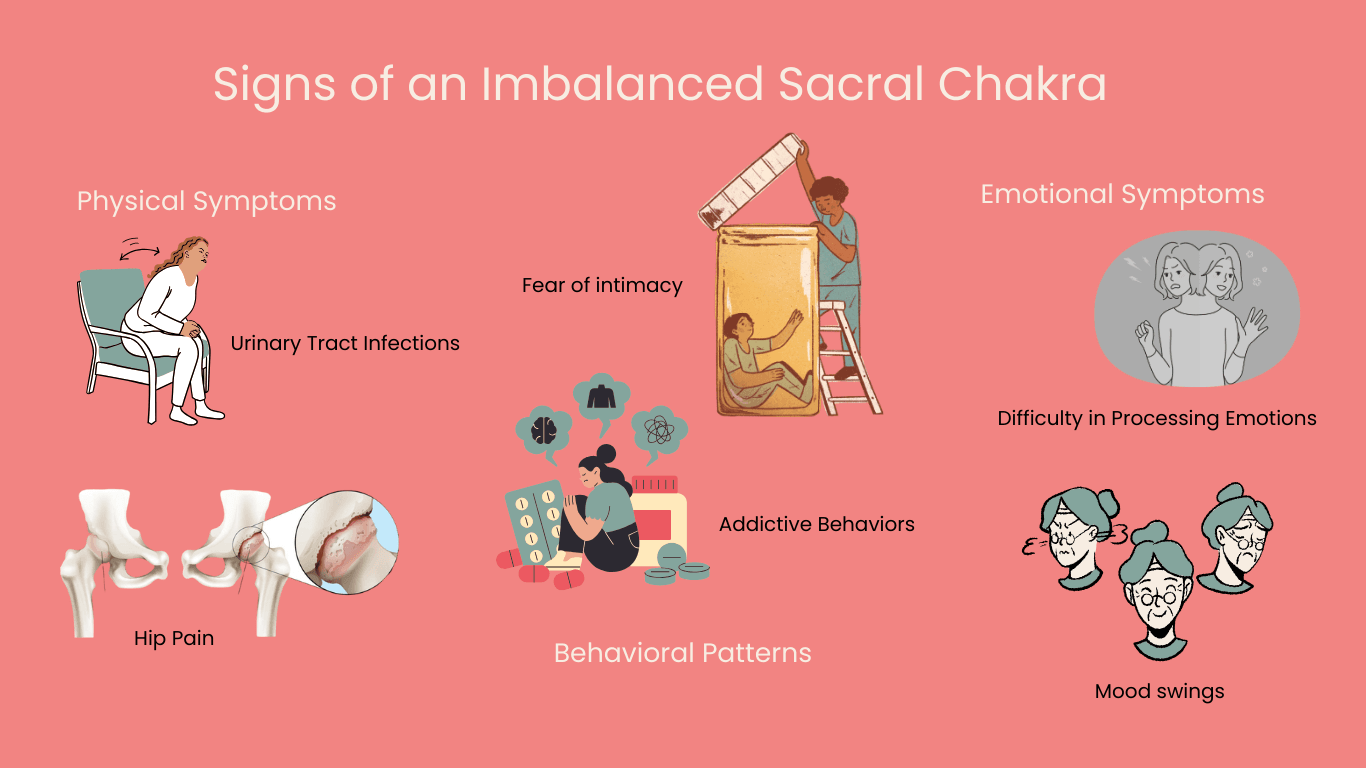
An imbalanced Sacral Chakra can manifest as:
- Physical Symptoms: Reproductive issues, urinary tract infections, hip pain, lower back pain, digestive issues
- Emotional Symptoms: Mood swings, emotional numbness, difficulty in processing emotions
- Behavioral Patterns: Fear of intimacy, creative blocks, addictive behaviors, lack of passion or motivation. To address these blocks, many students turn to the structural and emotional release found in Yin Yoga and Fascia health.
The Sacral Chakra & the Nervous System
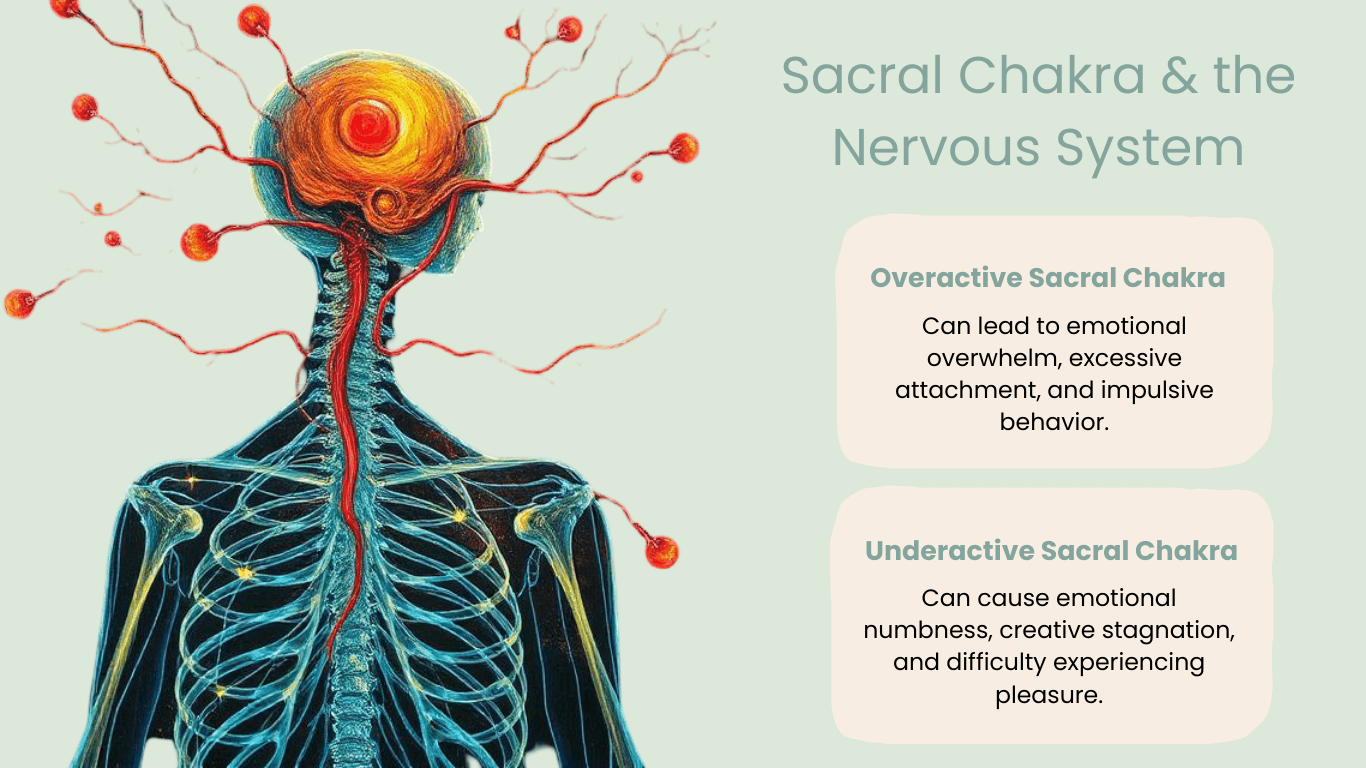
The Sacral Chakra is closely linked to the lumbar plexus and the parasympathetic nervous system, which governs rest, relaxation, and digestion.
- Overactive Sacral Chakra: Can lead to emotional overwhelm, excessive attachment, and impulsive behavior.
- Underactive Sacral Chakra: Can cause emotional numbness, creative stagnation, and difficulty experiencing pleasure.
Balancing the Sacral Chakra helps regulate emotions, enhance creativity, and cultivate joyful living – a critical skill taught in our 300-Hour Advanced Yoga Teacher Training for teachers looking to work with high-stress corporate clients. To see how these energetic centers mirror our physical anatomy, explore our full guide on The Connection Between Chakras and the Nervous System.
Holistic Female Health Connection
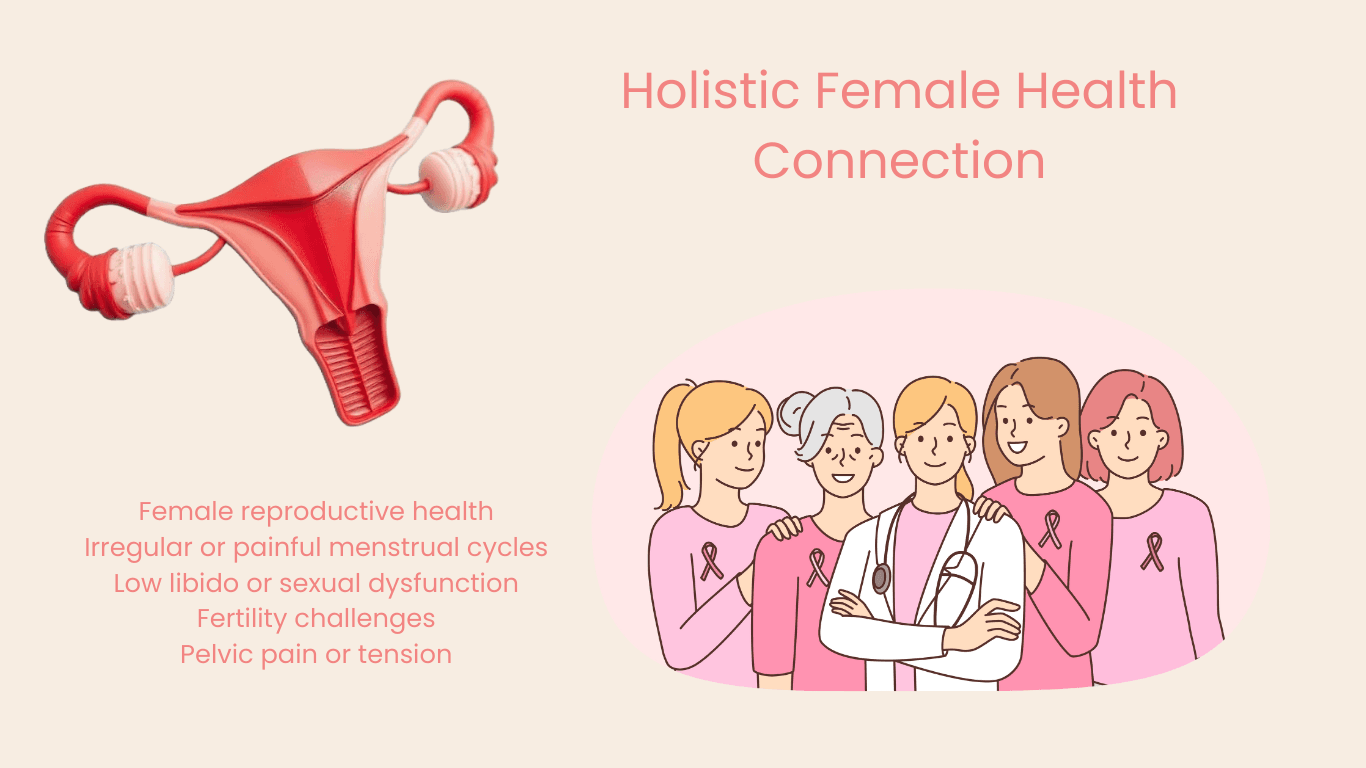
The Sacral Chakra is deeply connected to female reproductive health and menstrual cycle regulation. It is also regarded as the womb as the seat of life, holding the energy of creation and nurturing. An imbalanced Sacral Chakra may contribute to:
- Irregular or painful menstrual cycles due to blocked energy flow
- Low libido or sexual dysfunction resulting from emotional suppression
- Fertility challenges linked to emotional trauma or stress
- Pelvic pain or tension, affecting overall reproductive health
By nurturing the Sacral Chakra through mindful movement, breathwork, and creative expression, women can enhance their reproductive health, hormonal balance, and emotional well-being. our Registered Prenatal Yoga Teacher (RPYT) training offers the specialized tools needed to nurture female reproductive health and hormonal balance.
Practical Ways to Balance the Sacral Chakra
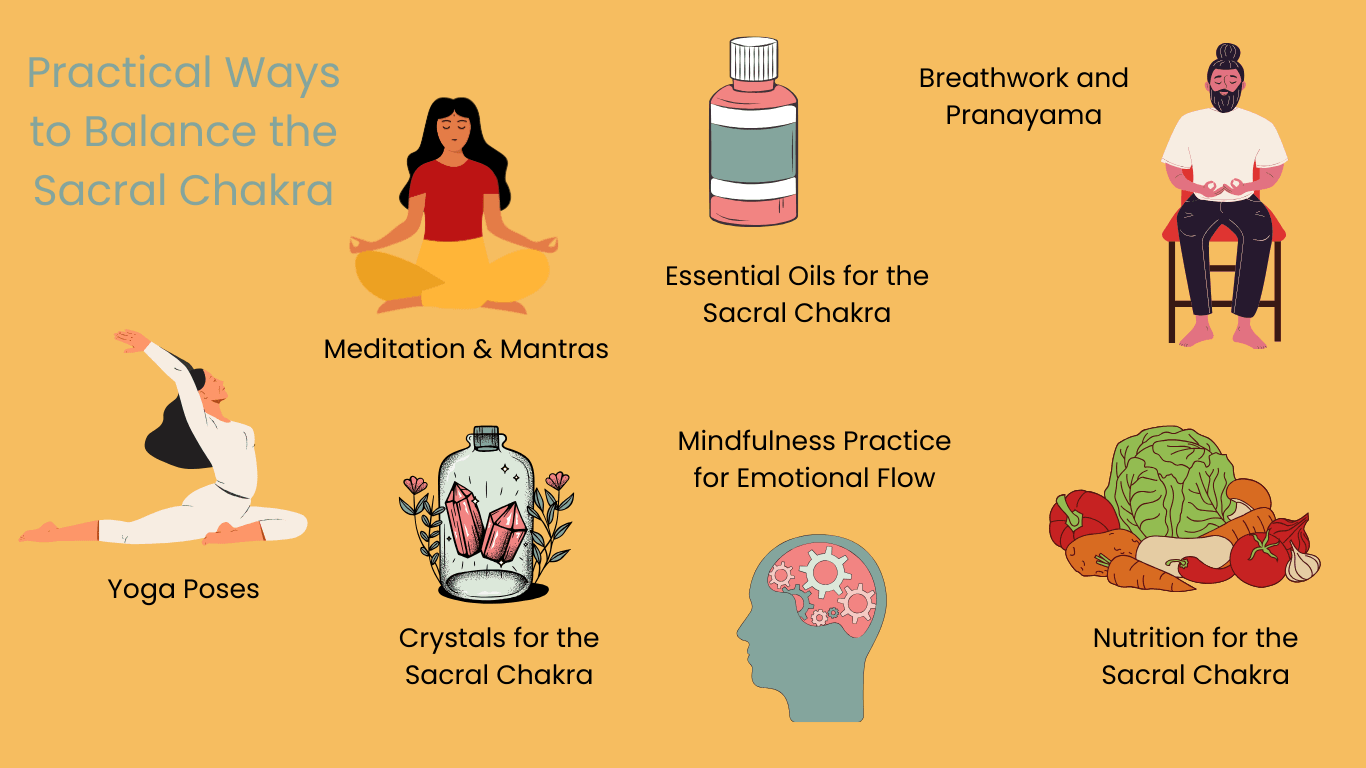
Yoga Poses
- Hip Openers: Baddha Konasana (Bound Angle Pose), Eka Pada Rajakapotasana (Pigeon Pose), Anjaneyasana (Low lunge), Supta Baddha Konasana (Reclined Bound Angle Pose), Figure four
- Fluid Movements: Cat-Cow, Pelvic Circles, Yoga flows
- Core Activation: Navasana (Boat Pose), Utkata Konasana (Goddess Pose)
- Expert Tip: Focus on fluid movements like pelvic circles, which are covered in the 200-Hour Multi-Style curriculum.
Breathwork and Pranayama
- Nadi Shodhana (Alternate Nostril Breathing) to restore balance
- Bhastrika (Bellows Breath) to energize and activate
- Kapalbhati (Shining Skull Breath) to cleanse stagnant energy
- Ujjayi (Ocean Breath) to promote relaxation of the pelvic floor
- Brahmari (Bee Breath) to release tension and enhance emotional flow
- Deep diaphragmatic breathing to enhance relaxation and emotional flow
Explore our full Pranayama & Breathwork specialization for more techniques.
Meditation & Mantras
- Sacral Chakra Meditation: Visualizing a warm orange light flowing through the lower abdomen
- Mantra Chanting: Repeating “Vam” to stimulate and balance the chakra
- Guided Creative Meditations: Using imagery and visualization to unlock creativity
For deep emotional healing, many find success combining this with Yoga Nidra (The Science of Sleep), which allows the subconscious to process creative blocks.
Crystals for the Sacral Chakra
- Carnelian (passion and motivation)
- Orange Calcite (creativity and emotional healing)
- Moonstone (feminine energy and hormonal balance)
- Sunstone (joy and personal empowerment)
- Amber (grounding and purification)
Mindfulness Practice for Emotional Flow
Sit or lie in a comfortable position and bring awareness to your lower abdomen. With each inhale, imagine a warm orange light expanding in this area, bringing emotional warmth and creativity. With each exhale, release tension and stagnant energy. Practice for 5-10 minutes to enhance emotional flow and vitality.
Essential Oils for the Sacral Chakra
- Ylang Ylang: Enhances sensuality and pleasure
- Sweet Orange: Uplifts and stimulates creativity
- Sandalwood: Encourages emotional stability
- Jasmine: Supports feminine energy and intimacy
Nutrition for the Sacral Chakra
- Orange-colored foods: Oranges, mangoes, carrots, pumpkin
- Hydrating foods: Coconut water, cucumbers, melons
- Healthy fats: Avocados, nuts, seeds
- Fermented foods: Yogurt, kimchi, kombucha (to support gut health and emotional balance)
Specific yoga postures can also help activate and balance this energy center. You can explore several effective asanas in our Yoga Poses guide.
Conclusion & Reflection
The Sacral Chakra is the key to emotional well-being, creativity, and pleasure. By nurturing this energy center, we allow ourselves to experience life with joy, passion, and fluidity.
Reflection: Do you feel connected to your emotions and creativity? How do you express joy and sensuality in your life?
Now that you’ve explored the fluidity of the Sacral Chakra, ensure your foundation is strong by revisiting our guide on the Root Chakra. Stay tuned for our next blog, where we explore the Solar Plexus Chakra—the center of confidence and personal power!
If you’re ready to master the chakras in the human body and turn your passion into a career, apply for our 2026 intake today. If you’re ready to master the chakra system and turn your passion into a career, apply for our 2026 YTT intake today.