
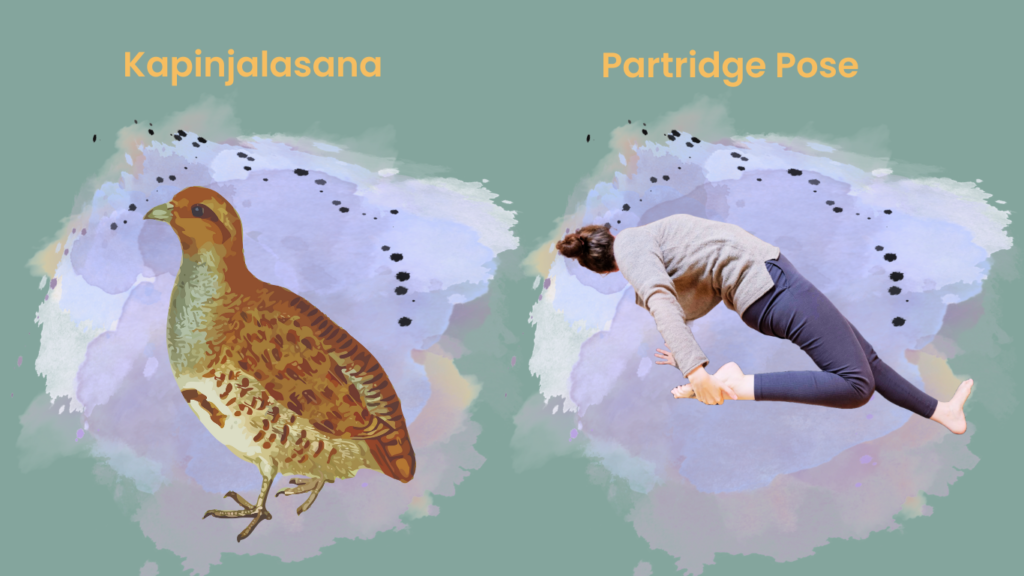
Sanskrit: कपिञ्जलासन
Kapinjalasana, or Partridge Pose, is named after the Kapinjala, which refers to a type of partridge in Sanskrit. The partridge is known for its graceful posture, often standing upright with a poised demeanor. In various cultures, the partridge symbolizes vigilance, grace, and a strong connection to nature.
From a plank pose, shift your weight to the right side and come into a side plank (Vashisthasana) position.
When you have a stable position, bend your upper leg and try to catch the left foot with your left arm.
Hold the pose for a few breaths, release the foot, and return to side plank.
From here, come into plank position, bring your knees down, and rest in Balasana (Child’s Pose).
Repeat on the other side.
Strengthens the arms, shoulders, and core muscles, which are essential for maintaining balance in the pose.
Enhances overall balance and coordination by challenging the body to stabilize while balancing on the hands.
Stretches and opens the hips, including the hip flexors (psoas and quads), promoting greater flexibility in the lower body.
Opens the chest and helps lift the mood.
Requires stability and balance, which increases awareness of body alignment and improves control and precision of movements.
Avoid this pose if you have wrist injuries or chronic wrist pain, as it places strong pressure on the wrists.
Those with shoulder injuries or instability should exercise caution, as the pose requires strong shoulder engagement.
Pregnant women should avoid this pose or practice with modifications, as the balance and deep abdominal stretch can be uncomfortable.
Avoid this pose if you’ve had recent abdominal surgery, or consult a healthcare provider before attempting it.
Individuals with carpal tunnel syndrome should avoid this pose due to the pressure on the wrists.
Avoid this pose if you have chronic back pain, as the required core strength and balance may aggravate the condition.
Keep both feet on the ground and practice side plank initially to build balance and strength.
If it’s difficult to balance in this posture, place your lower knee on the floor for support and catch your upper foot.
You can also explore our Yoga Poses guide to discover more essential yoga asanas and how they support balance, flexibility, and overall well-being.
Postures like this are just the beginning of the yogic journey. In our 200 Hour Yoga Teacher Training in Bali, you’ll explore traditional yoga philosophy, meditation, pranayama, and advanced asana practice while immersing yourself in the heart of Bali’s yoga culture.
Explore Our Yoga Teacher Training in Bali →Learn Other Poses:
Popular Courses in Bali
200 hour Yoga Teacher Training in Bali | 300 hour Yoga Teacher Training in Bali | 500 hour Yoga Teacher Training in Bali | 50 Hours Yin Yoga Training in Bali | 50 hours Pranayama Training in Bali | 50 hours Yoga Nidra Training Bali | 50 hours Arm Balancing Training Bali | 100 hour Ashtanga Training Bali
Popular Courses in Germany
200 hour Yoga Teacher Training in Germany | 300 hour Yoga Teacher Training Germany | 50 Hour Yin Yoga Training Germany | 50 Hour Pranayama Training Germany | 50 hour Yoga Nidra Training Germany | 50 Hour Arm Balancing Training | 100 hour Ashtanga Training Germany

