Ashtanga Vinyasa Yoga integrates three fundamental elements, known as the Tristhana – breath, asana (posture), and drishti (gaze). These components demand a high level of focus and concentration, which helps in clearing and calming the mind.
Ashtanga Yoga consists of six fixed series and is part of the Hatha Yoga system, with its roots in the ancient text, the Yoga Kurunta. It is the foundation of all vinyasa, power, and flow styles that are popular in the West today.
If you’re interested in delving deeper into this vigorous Hatha Yoga practice, join us for our 100-hour Ashtanga Vinyasa Yoga Teacher Training in Bali.
This course is embedded in the YACEP program of Yoga Alliance and you can add the 100 hours of this course to your continuous education hours.


We offer a place where you can find happiness through movement, pranayama, meditation and well-balanced nutrition. We are here to guide you on your spiritual journey, to connect with your Inner-Self and to find contentment and peace in life.
What is Ujjayi breath and why is it important? What is the difference between Ashtanga Vinyasa and Vinyasa Yoga? How and when do you engage the bandhas? Only three questions we are going to answer in our Ashtanga course. This course consists of practice and theory modules to give you a deeper understanding of the Ashtanga Vinyasa system. We are trying to provide you the best Ashtanga Yoga course in Bali and hope you will trust us to guide you on your Ashtanga Vinyasa journey!
In our Ashtanga Yoga Teacher Training, we will engage in daily practice of Ashtanga Yoga, encompassing both Mysore style and led classes.
The Mysore style allows for individualized instruction, enabling practitioners to progress at their own pace while receiving personalized adjustments and guidance from the teacher. This self-paced practice fosters a deeper connection to the asanas and encourages self-discipline and independence.
Led classes, on the other hand, provide a synchronized group experience, where practitioners follow the teacher’s cues, increasing collective energy and rhythm.
These sessions help refine alignment and ensure a comprehensive understanding of the sequence. Both styles complement each other, offering a balanced approach that enhances flexibility, strength, and mental clarity, while also cultivating a dedicated and mindful practice.
In our Ashtanga training we will introduce you to both teaching styles – Led classes and Mysore style. You will learn
~ Vinyasa terminology
~ Sanskrit terms like counts and asana names
~ Tips and tricks to learn to jump back and jump front into sitting poses
~ Tristhana of Ashtanga
~ Opening and Closing mantras
~ Asana variations for different levels
~ Ashtanga sequence for menstruation
We thoroughly cover the Primary Series of Ashtanga Yoga, ensuring a strong foundation in this essential sequence.
Introduction to the Art of Teaching Ashtanga Vinyasa: You will be introduced to the art of teaching Ashtanga Vinyasa, equipping you with the skills to guide others in Mysore and led classes.
Importance of Ujjayi Breath: Learn the significance of Ujjayi breath during Ashtanga Vinyasa practice, understanding how this breathing technique supports the practice.
Mastering Vinyasa Flow: Gain proficiency in performing Vinyasa flow, including the intricate movements of jumping back and front, to maintain a fluid and dynamic practice.
Technique for Chakrasana (Rollback): Discover how to execute Chakrasana with precision.
Transition from Hasta Uttanasana to Urdhva Dhanurasana: Learn the drop back from Hasta Uttanasana into Wheel pose and standing back up into Hasta Uttanasana with control.
We will break down the asanas of the Primary Series and you will learn the sequence of the poses, their alignment as well as verbal and physical adjustments.
Surya Namaskar A
Surya Namaskar B
Standing postures
~ Padangusthasana
~ Padahastasana
~ Trikonasana
~ Parivritta Trikonasana
~ Utthita Parsvakonasana
~ Parivritta Parsvakonasana
~ Prasarita Padottanasana
~ Parsvottonasana
~ Utthita Hasta Padangusthasana
~Ardha Baddha Padma Uttanasana
~ Utkatasana
~ Virabhadrasana I
~ Virabhadrasana II
Sitting postures
~ Dandasana
~ Paschimottanasana A, B & C
~ Purvottanasana
~ Ardha Baddha Padma Paschimottanasana
~ Tyriang Muka Pada Paschimottanasana
~ Janu Sirsasana A, B & C
~ Marichyasana A, B C & D
~ Navasana
~ Bhujapidasana – jump back from crow pose to chaturanga dandasana
~ Kurmasana
~ Supta Kurmasana – jump back from dwipadahasthasana to chaturanga danasana
~ Garbha Pindasana
~ Kukkutasana
~ Baddha Konasana
~ Upavistha Konasana
~ Supta Konasana
~ Supta Padangustasana A & B
~ Ubhaya Padangustasana
~ Urdvha Mukha Paschimottanasana
~ Setu Bandhasana
Finishing postures
~ Urdvha Dhanurasana
~ Paschimottanasana
~ Savasana
~ Salamba Sarvangasana
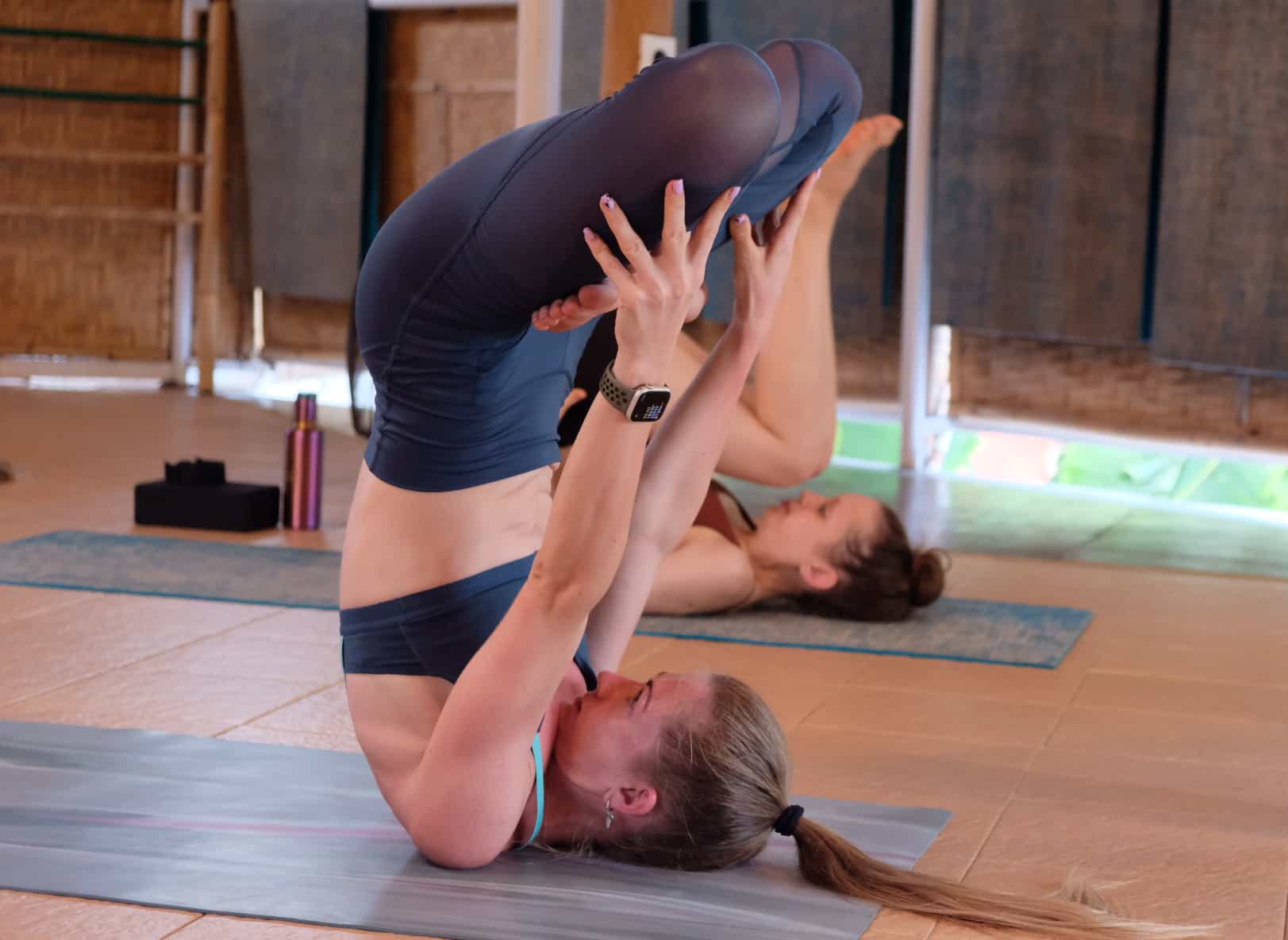
~ Halasana
~ Karnapidasana
~ Urdvha Padmasana
~ Pindasana in Sarvangasana
~ Matsyasana
~ Uttana Padasana
~ Sirsasana
~ Balasana
~ Baddha Padmasana
~ Padmasana
~ Utpluthi
~ Savasana
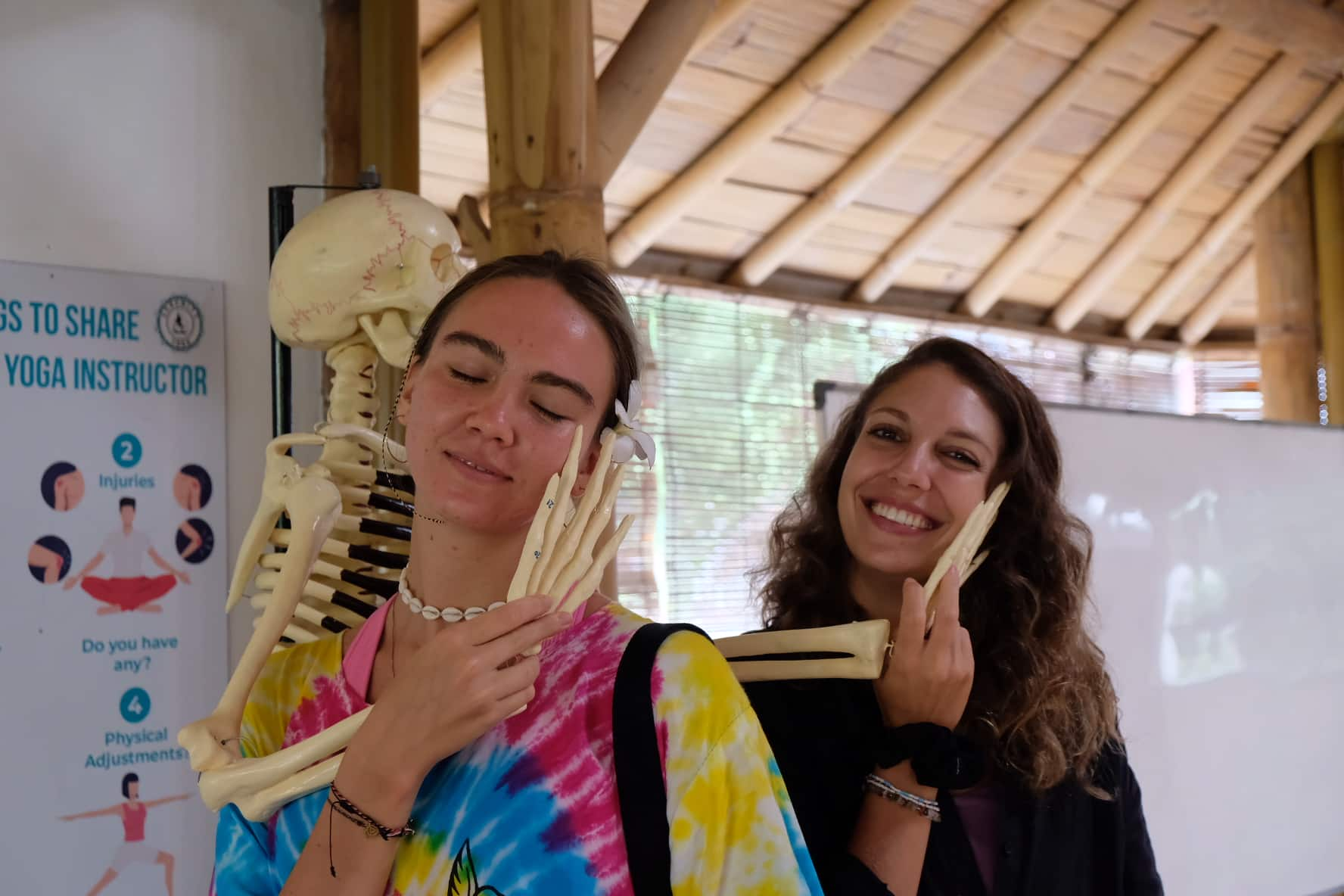
To understand the effects of this vigorous practice on our physical body we cover the
To learn more about the foundation of Hatha Yoga, from where all asana-based Yoga practices emerged from we focus on the Hatha Yoga Pradipika and the Gheranda Samhita.
The Hatha Yoga Pradipika is one of the oldest and most influential texts on Hatha Yoga. Written by Swami Swatmarama in the 15th century, it is a comprehensive guide to the physical and spiritual practices of Hatha Yoga. The text is divided into four chapters, covering asanas (postures), pranayama (breathing techniques), mudras (gestures), and bandhas (energy locks), as well as meditation and samadhi (state of oneness).
The Gheranda Samhita is another seminal text on Hatha Yoga, attributed to the sage Gheranda and dating back to the 17th century. This text is structured as a dialogue between Gheranda and his disciple, Chandakapali, and it provides a detailed
The time schedule is not fixed and can change according to location, teacher availability, weather conditions and general situation.
Ashtanga Vinyasa | 05:00 to 07:00 am |
Breakfast | 07:00 to 09:15 am |
Yoga Philosophy / Anatomy | 09:15 to 10:15 am |
Rest / Self Study | 10:15 to 12:00 Pm |
Asana Alignment | 12:00 to 01:30 pm |
Break | 01:30 to 05:00 pm |
Body opening | 05:00 to 06:00 pm |
Pranayama | 06:00 to 06:30 pm |
Mantra Chanting | 06:30 to 07:00 pm |

Being a Yoga teacher is more than showing poses. It’s about guiding others with compassion on their journey to a better life.
Posted onTrustindex verifies that the original source of the review is Google. I did my 200YTT with Anandam Yoga School in August in Bali and it was an exceptional experience. Navin and Ming guided us through the course and shared their valuable yoga experience and knowledge with us. Katharina’s anatomy classes perfectly linked the facts to the yoga practice. She also provided a detailed and very well- structured course manual which I still keep consulting. I enjoyed the course very much, could improve my own practice, deepen my knowledge and prepare myself for a step forward to become a yoga teacher. I am thinking of doing some other training courses with Anadam Yoga School in the future. Thank you, Anandam Yoga School team:-)Posted onTrustindex verifies that the original source of the review is Google. I completed my 200h YTT in 2025, and it was truly a transformative experience. While the classes sometimes felt overwhelming, everything gradually fell into place, and the journey continues well beyond the training itself. A heartfelt thank you to the teachers who made this possible: ✨ Navin, for teaching from his heart, his ability to break down asanas and provide encouragement when it got tough. ✨ Katharina and Bhavna, for making anatomy classes engaging and accessible. The training was more than getting stronger physically - it was wholesome and encouraged self-discovery and inner growth.Posted onTrustindex verifies that the original source of the review is Google. I had an incredibly beautiful week at Heimbach in Germany while taking part in the Yoga Nidra Teacher Training. Sandeep and Katharina are very good and really nice teachers with a lot of knowledge of and experience with authentic yoga. I am happy that they shared this with me and I feel that this made me grow in my yoga path. This, added to the positive atmosphere they created during the training, made this week an unforgettable experience!Posted onTrustindex verifies that the original source of the review is Google. I had a wonderful week of yoga Nidra teacher training at Heimbach in Germany. Beautiful location located in the green hills of the Eifel. Learning from Sandeep and Katharina was very precious, they have so much knowledge about and experience with what true yoga is. And they create such a nice athmosphere with their beautiful personalities as well! I had an amazing week!Posted onTrustindex verifies that the original source of the review is Google. J’ai suivi en avril 2025 la formation de 200 heures avec Navin, Ming et Katerina et j’en ai eu une expérience très positive. Les cours de yoga de Navin et Ming m’ont aidé à progresser dans les postures. Merci à Katherina pour ses cours d’anatomie compréhensibles pour des élèves dont l’anglais n’est pas la langue maternelle. Je ne peux que recommander cette formation pour toute personne qui souhaite approfondir ses connaissances sur le yoga dans le but ou pas de l’enseigner.Posted onTrustindex verifies that the original source of the review is Google. I had the most wonderful experience with Anandam Yoga School! I enrolled myself for the 200hours yoga teacher training course in April 2025 and it was the most transformative experience I had so far. Navin and Ming gave us alot of guidance in asanas practices and the long history of yoga. Also Katharina provided us with an in-depth knowledge about human anatomy. I will definitely enrol myself with Anandam yoga school in the future to enrich myself!Posted onTrustindex verifies that the original source of the review is Google. J’ai réalisé le 200h YTT avec Anandam à Bali. L’expérience était extraordinaire et très enrichissante. Les profs sont supers. Au-delà de la formation, j’ai beaucoup appris sur moi même, pris confiance en moi et en mes capacités. Je pense faire le 300h YTT également avec cet organisme !Posted onTrustindex verifies that the original source of the review is Google. I had a beautiful experience at Anandam Yoga School. Naveen, Katharina and Sandeep were wonderful teachers. They are so kind and always allow for an atmosphere to feel safe in your vulnerability. The YTT is always an experience where people are learning and growing physically, mentally, emotionally and spiritually. My yoga teachers always allowed for this growth whilst supporting us when we made mistakes or found poses hard, for example. The YTT here was a truly precious experience for me and one I will hold in my heart. I loved the authenticity and the way we could connect to the yoga philosophy and spirituality of yoga - which is what makes yoga yoga. There was an emphasis on teaching traditional yoga which is incredibly important and I appreciated this a lot. Thank you for my wonderful teachers for their kindness and calmness throughout my journey. The YTT created an opportunity for self-discovery that I truly valued. I enjoyed socially learning about yoga with a lovely group of people. I found depth in my connection with the spirituality of yoga in my solitude and had a real opportunity for self-reflection and empowerment with the YTT. I would definitely recommend it to anyone considering YTT. I am still in touch with Naveen, Katharina and Sandeep and am sure our paths will cross via yoga or friendship again at some point in our lives. Lots of love to you, Bhawna 🤍Posted onTrustindex verifies that the original source of the review is Google. I recently completed the 200-hour Yoga Teacher Training with Anandam, and it was one of the most beautiful gifts I’ve ever received in my life. My intention going into the course was to expand my understanding of the yogic philosophy, anatomy, and deepen my personal asanas practice— I walked away with everything I hoped for, and more than I could have imagined. The environment Sandeep and Katharina created allowed us to really dive deep —physically, mentally, and spiritually. If I had to sum up the experience in one word, it would be authentic. Every aspect of the training, from the teachings to the community, was rooted in true yogic history & values. The teachings themselves were structured, disciplined and methodical, yet delivered in a way that felt accessible and not intimidating. I’m the kind of person who loves to ask a million questions, and all of the teachers so happy to engage (even when I thought i might be being annoying!) Amidst all the learning, there was also so so much playfulness, fun, and laughter. It made the experience feel lighthearted, joyful, and full of connection. Beyond the course completion, the supporting materials we received have been invaluable -they're tools I continue to reference almost daily. Meeting and learning from Sandeep and Katharina, (& Nadeem & Ming) was transformative, and I’m beyond grateful to have had the opportunity to learn and grow in such a supportive environment from such beautiful, knowledgeable & grounded people. <3Posted onTrustindex verifies that the original source of the review is Google. Dear Katharina, dear Sandeep, dear Navin, dear Ming - you wonderful teachers! A heartfelt thank you for all the new knowledge, your experiences you shared with us and the loving space you have created to meet all these wonderful people in our small group of the 200hour teacher training! I loved the atmosphere, I loved the place, I loved the togetherness and of course I loved the pool to cool down 😅 in hot Bali!

We genuinely value direct bookings with us as they help us provide you with the best possible experience. Please note that we have changed our course venue for 2025. The pictures below show the new venue and accommodation options.
Early Bird are special prices for the first 6 registrations per month. Register now to benefit from this special offer.
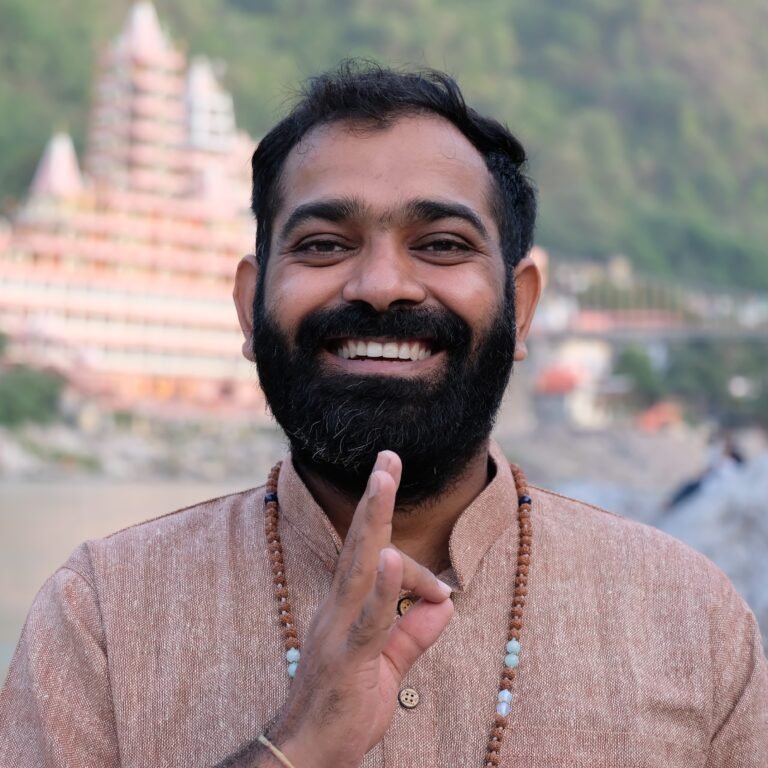
Lead Teacher
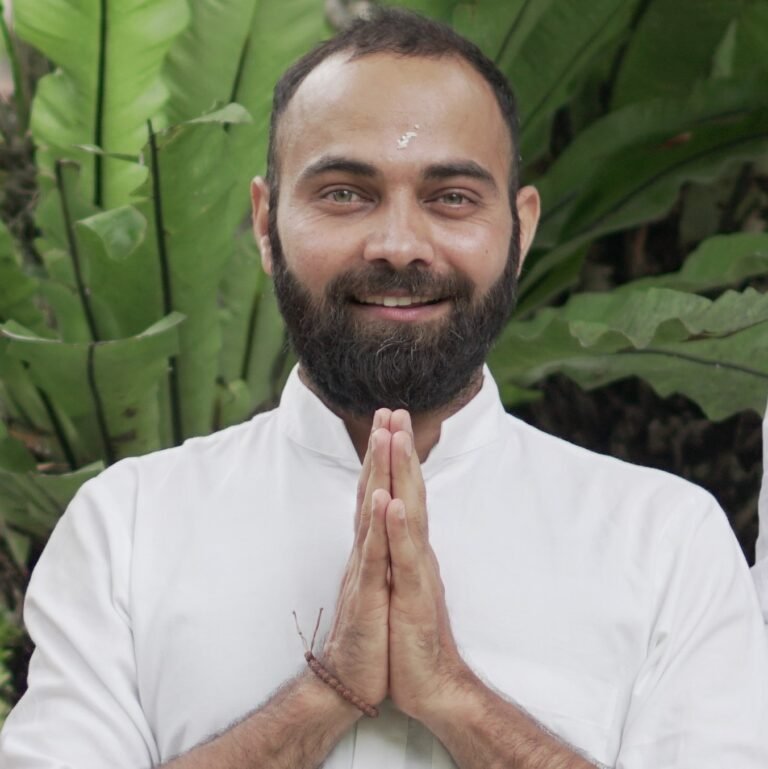
Lead Teacher
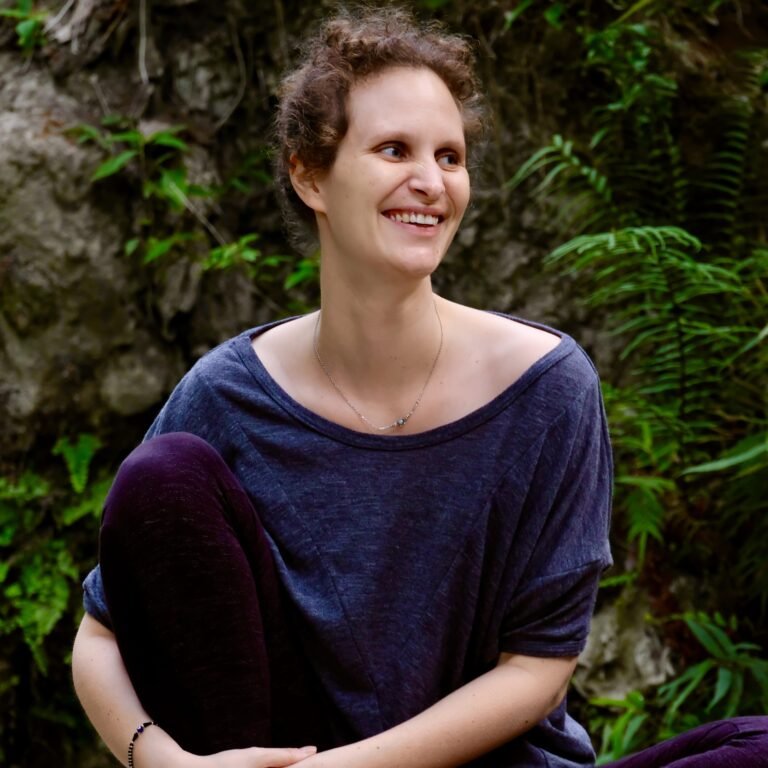
Lead Teacher
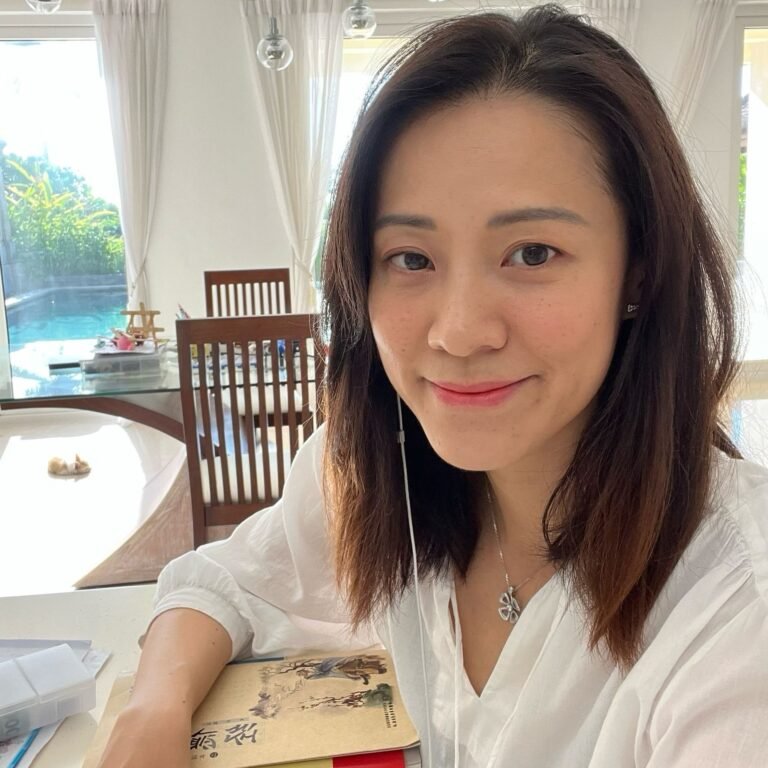
Yoga Teacher
Being a Yoga teacher is more than showing poses. It’s about guiding others with compassion on their journey to a better life.


No, a 200 hour Yoga certificate is not needed to join our Ashtanga Vinyasa Yoga teacher training. You can use the course to deepen your own practice and learn more about the practice of Ashtanga Vinyasa. You will also be eligible to teach Ashtanga Vinyasa afterwards.
Our average class size is 5 to 10 students. We believe in individualized support thus the smaller group size. It allows us to support every student on their personal Yoga journey.
The youngest student we had was 18 and the oldest student we had so far was 57. So, we have quite a wide age range, which beautifully allows Yoginis and Yogis of different ages to learn from each other.
Yes, definitely! It is a beautiful way to deepen your own practice and learn more about Ashtanga Vinyasa.
We offer different course packages. You can choose to stay with us or find you own accommodation. The basic course fee (without accommodation) includes all study materials, Yoga Alliance certification after successful completion and daily breakfast. You can choose from different course and accommodation packages if you choose to stay with us.
In this Ashtanga Vinyasa training you will
Practice the Ashtanga Primary Series daily
Learn how to teach the Primary Series (Mysore style and Led classes)
Yoga Anatomy
Hatha Yoga Scriptures
Learn the alignment, modification, prop use and hands-on adjustment for all postures of the Primary series
Tips and tricks to learn how to jump front, back and through
The nearest airport is I Gusti Ngurah Rai International Airport in Denpasar. From there you can book a grab or gojek to reach the course venue (250 k – 300 k IDR). You can download the apps and they are a great to get around in Bali for reasonable prices. You can get a sim card at the airport.
Please bring comfortable, ideally light cotton clothes for the practice; white clothes for the opening and closing ceremonies; natural mosquito repellent; beach towels; your everyday toiletries; light and airy clothing; sunscreen and all you think you need for a wonderful time in the tropical Bali.
Yes, sure! We don’t have any dietary restrictions during our Yoga teacher training. However, we recommend to adhere to a vegetarian diet during the Yoga teacher training Bali, to feel the effects on body and mind.
Practice Yoga regularly, drink enough water, try to cultivate a positive and open mindset, try to get enough rest and take time for relaxation, try to include arm, shoulder and core strengthening exercises into your routine and learn the chart of the Ashtanga Primary series (order and asana names)
To reserve your spot in the course we kindly ask you to deposit $500. This deposit is non-refundable. In case you have to cancel the training for any reason, the deposit can be applied to a later training.
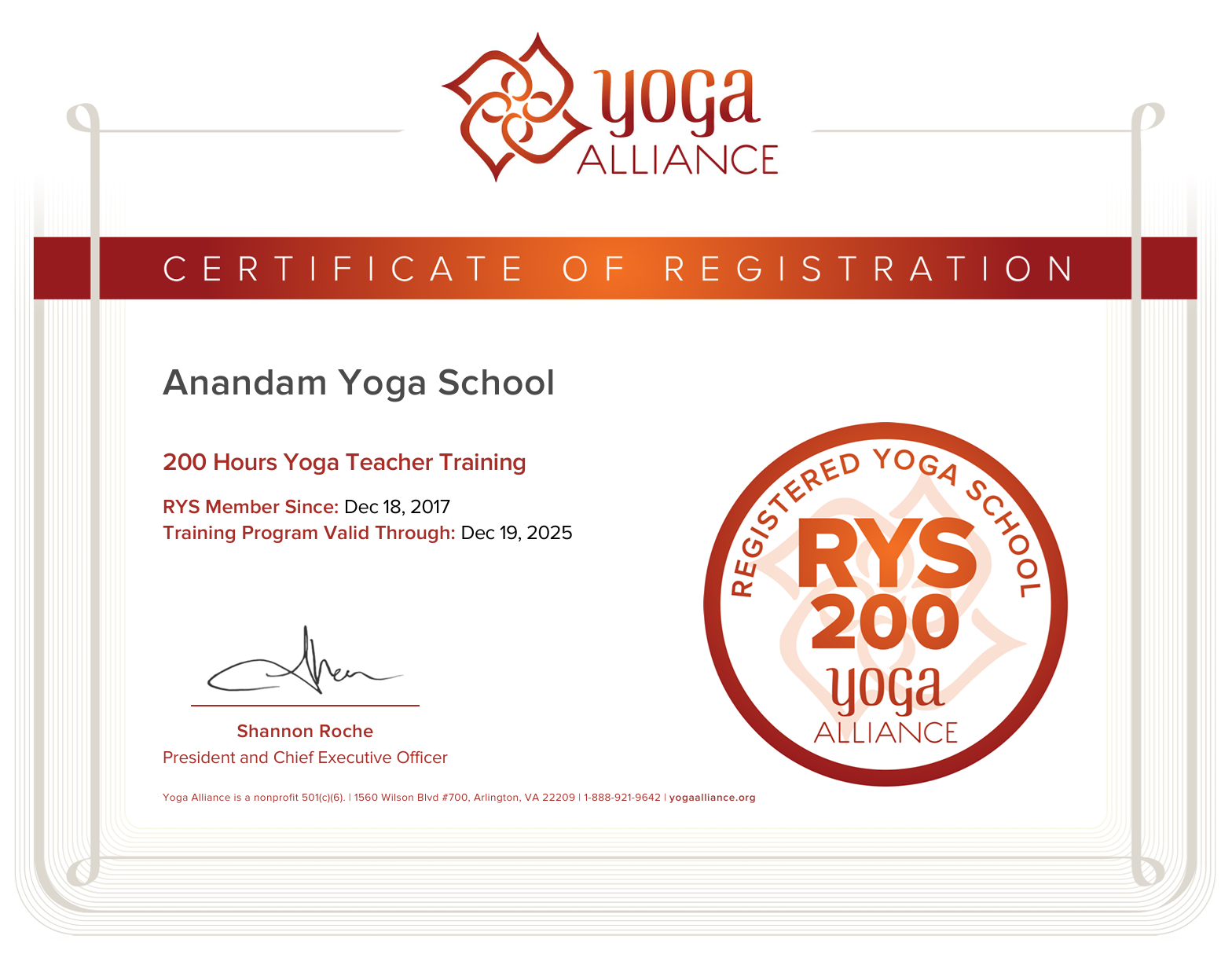
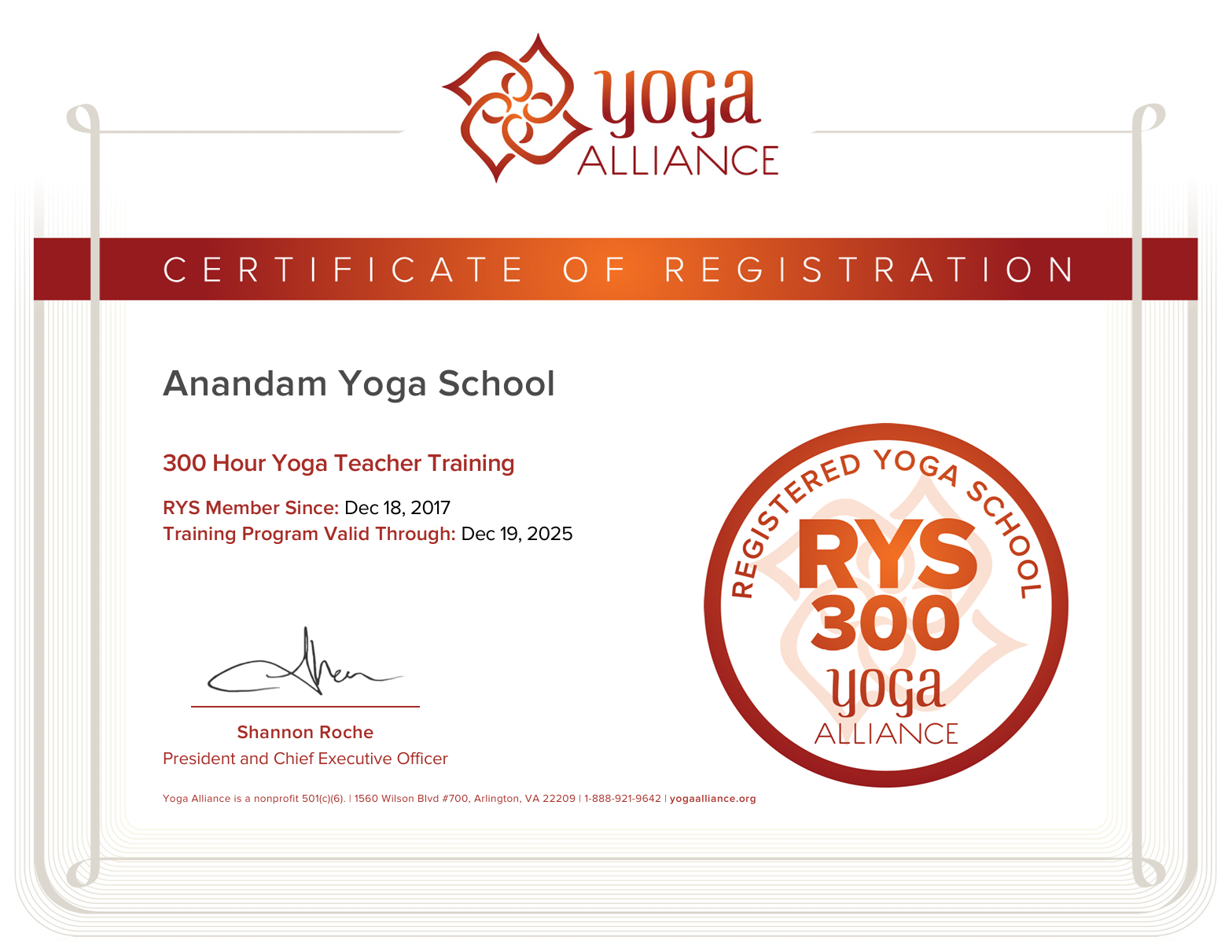
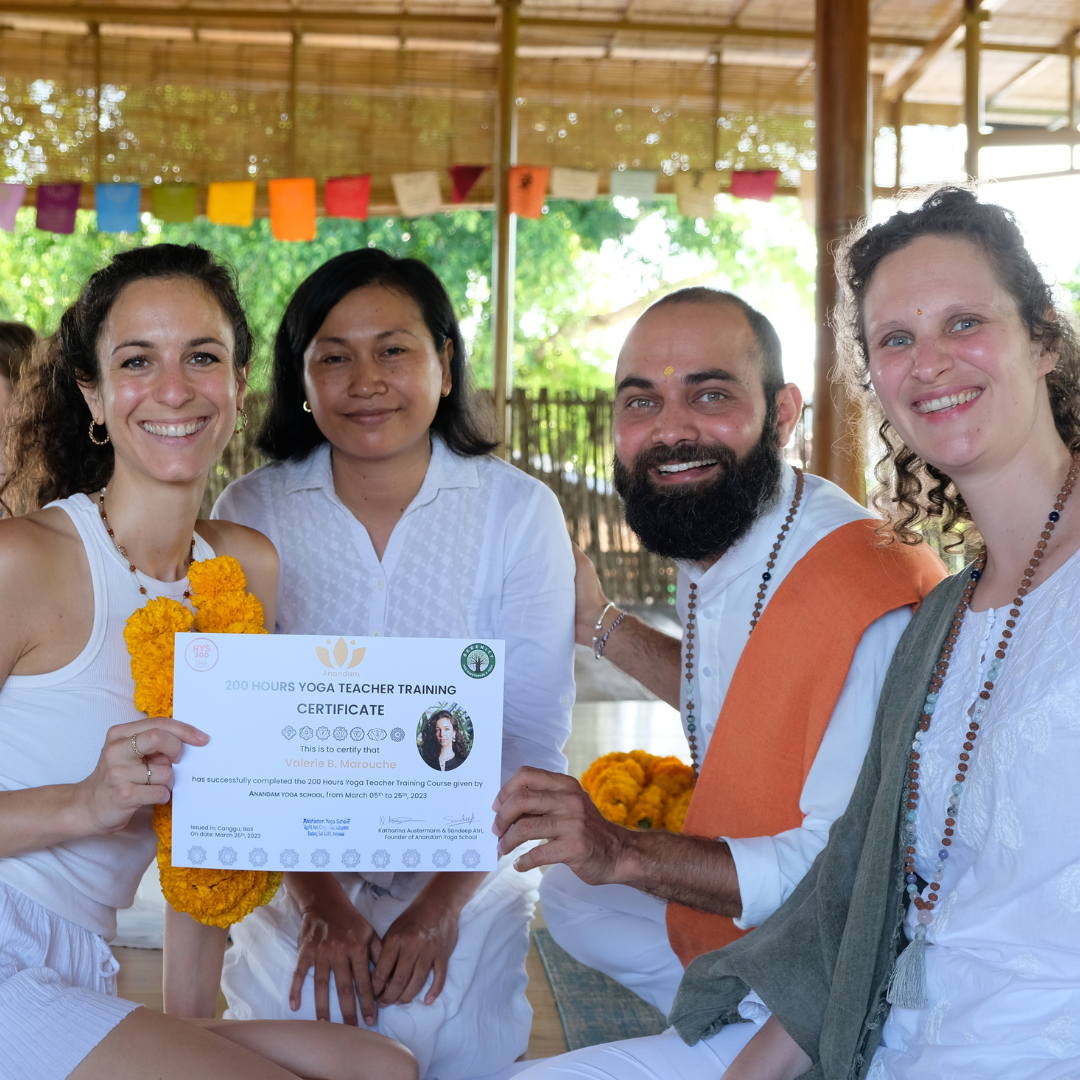
Yes, this 100 hour Ashtanga Yoga teacher training is registered with Yoga Alliance and part of the YACEP (Yoga Alliance continuous education program) and you will receive a Yoga Alliance affiliated certificate after successful completion. If you are already a Yoga teacher you can add the 100 hours to your continuous education hours.
Being a Yoga teacher is more than showing poses. It’s about guiding others with compassion on their journey to a better life.
Before joining Anandam Yoga School’s 100 hours Ashtanga Training in Bali you have to fulfill these eligibility criteria.