The science of myofascial tension, posture habits & why Yin Yoga works
by Dr. Katharina Austermann — Anandam Yoga School
We often talk about muscle memory, but fewer people realize that the fascia — the connective tissue that surrounds every muscle and organ — also adapts to our habits.
If you feel “stuck,” “tight,” or like your posture pulls you into familiar shapes, this is not just muscular tension. It’s the long-term behavior of your myofascial system adapting to your lifestyle, emotions, and movement patterns.
This phenomenon is often described as postural memory — the body’s tendency to return to the shapes we repeat most.
Let’s explore how this works, what science tells us, and how practices like Yin Yoga help reset long-held tension.
Fascia is a continuous, three-dimensional web of collagen, elastin, and fluid that runs through the entire body. It surrounds muscles, bones, nerves, organs, and creates an internal “biotensegrity” structure that allows the body to:
Unlike muscle fibers, which contract quickly, fascia responds slowly and changes through a process called mechanotransduction — where mechanical pressure, load, and stretch lead to cellular changes.
Schleip et al. (2012) describe fascia as a sensory-rich, adaptive tissue capable of long-term structural change based on movement behavior.
Schleip, R., Findley, T., Chaitow, L., & Huijing, P. (2012). Fascia: The Tensional Network of the Human Body.
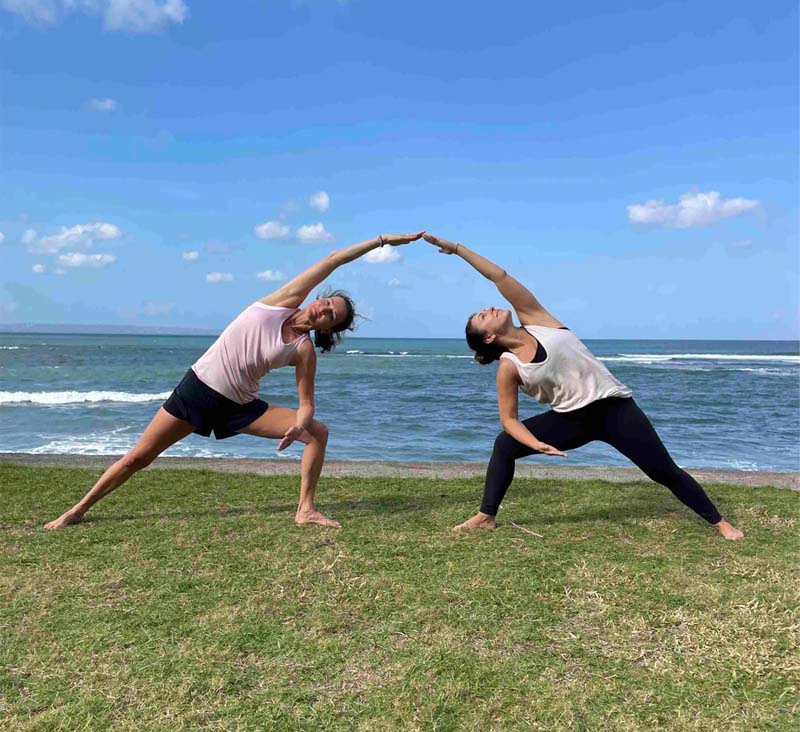
Fascia adapts to the shapes you repeat most often.
If you spend hours sitting with rounded shoulders, gripping your belly, or leaning into one hip, fascia remodels itself into the patterns you’re reinforcing.
This leads to sensations such as:
These are not simply “tight muscles” — they are fascial adaptations.
Studies show that maintaining a posture for long periods causes fascial tissues to densify and lose extensibility.
Cramer, H. et al. (2018). The role of fascia in movement and posture. Complementary Therapies in Medicine, 41, 124–130.
Langevin, H. M. (2006). Connective tissue: A body-wide signaling network? Medical Hypotheses, 66(6), 1074–1077.
Fascia responds best to slow, sustained, gentle load.
This is why Yin Yoga taught in Yoga Teacher Training School has profound effects on deep tension patterns.
During long, passive stretches (2–5 minutes):
Fascial layers absorb water and regain glide.
Fibrous sticking points begin to release.
Cells rearrange collagen fibers into healthier orientations.
Reduced muscle guarding allows deeper fascial layers to open.
Slow loading gently separates layers that have become stuck.
Slow loading gently separates layers that have become stuck.
This combination helps the body “reorganize” long-held patterns — essentially teaching the fascia a new memory.
Yin-like stretching has been shown to influence fibroblast activity and tissue remodeling.
Yahia, L. H. (1993). Viscoelastic properties of the human lumbodorsal fascia. Journal of Biomedical Engineering, 15(5), 425–429.
Langevin, H. M. et al. (2011). Stretching-induced changes in tissue structure. Journal of Cellular Physiology, 226(5), 1166–1175.
Students often describe fascial release in Yin Yoga as:
This emotional component has a biological basis: fascia contains six times more sensory nerve endings than muscle including nociceptors (pain receptors) and interoceptors — which means fascial release often brings emotional release.
Schleip’s work shows fascia contains contractile cells (myofibroblasts) influenced by emotional states and stress.
Schleip, R. (2003). Fascial plasticity – a new neurobiological explanation. Journal of Bodywork & Movement Therapies, 7(2), 104–116.
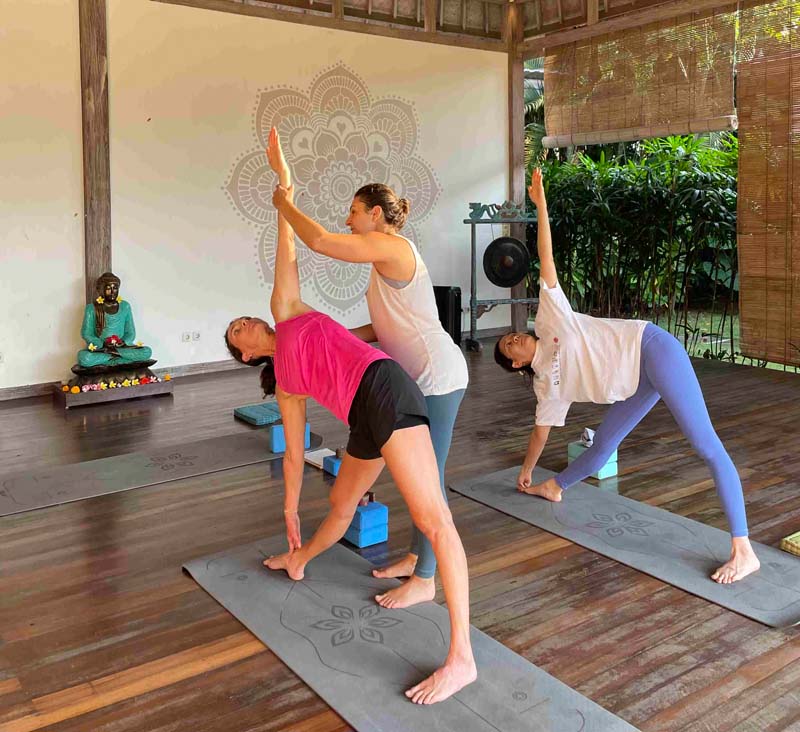
You can sense fascial tension through:
Fascial work isn’t about forcing flexibility — it’s about giving your body enough time to reorganize itself.
Your fascia adapts to how you sit, move, breathe, and even how you feel.
It holds your patterns — and with mindful practice, it can also release them.
Slow, sustained stretching, mindful movement, and body awareness help your fascia learn new, healthier patterns.
Your body is always learning from you. What you repeat becomes your posture — and what you hold becomes your shape.
Give your fascia something kind to remember.